Just Another Rocky Creek in the Gila
April 14-15, 2026
Lately I've been busier than a long-tailed cat in a room full of rocking chairs. When there was an unexpected break in the action, Dennis and I slipped away to a rocky creek in the Gila (which shall remain unnamed for its own protection) for a quick overnight. One of our favorite hiking trails drops into this canyon, but we never had the time to continue exploring downstream. We braved the very gnarly road to get us deeper into the canyon, set up camp in a grassy meadow at the end of the road, and gleefully set off downstream.
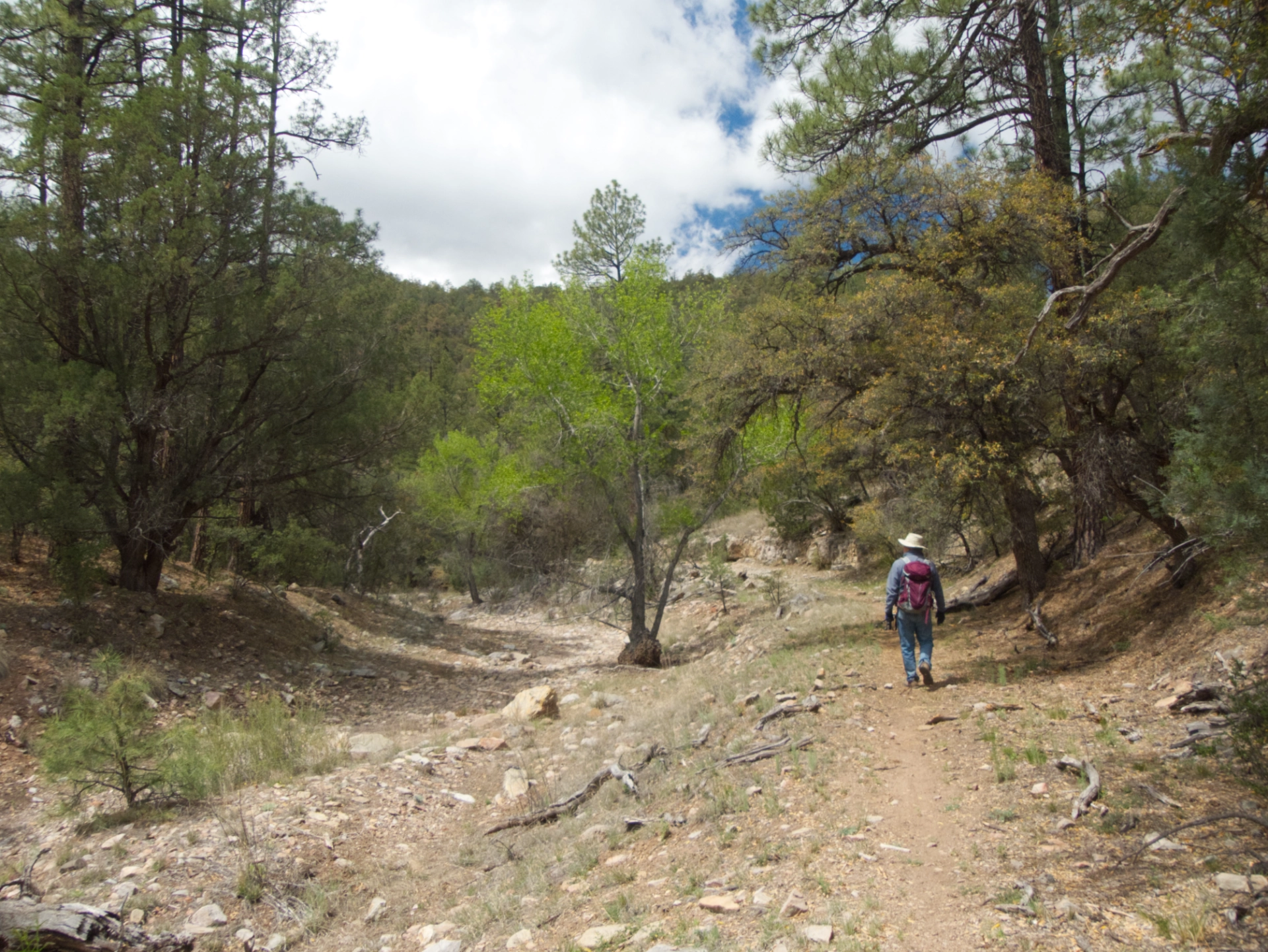
In short order, the canyon proved to be a blissful oasis shaded by a mixed forest of pondos, Fremont cottonwoods, Alligator junipers and Mexican blue oaks.
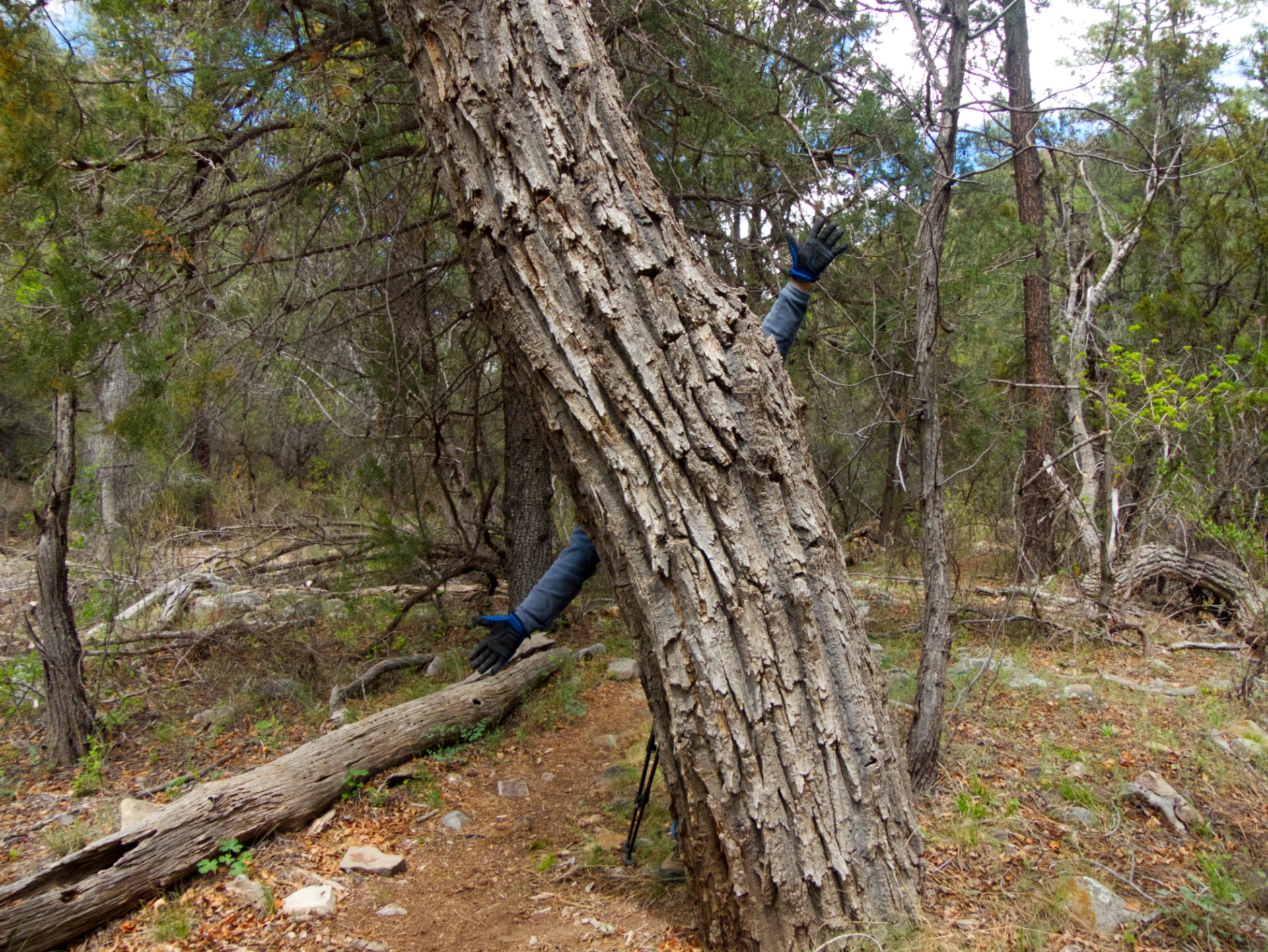
We love the Tree People. This cottonwood was "well armed".
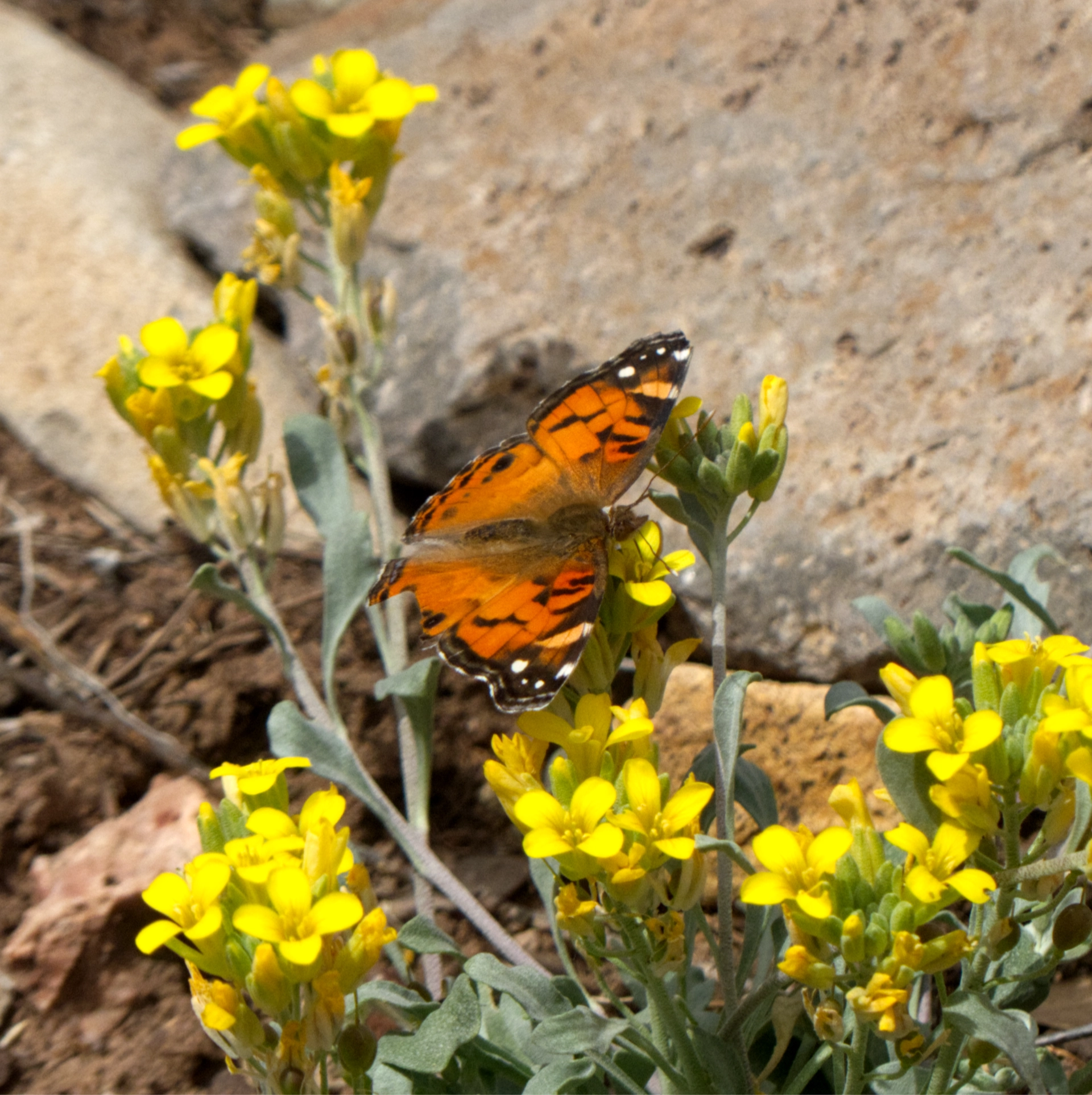
There was just the tiniest trickle of water in the stream, but it gave life to an amazing variety of flora and fauna. Above: American Lady and Fendler's Bladderpod
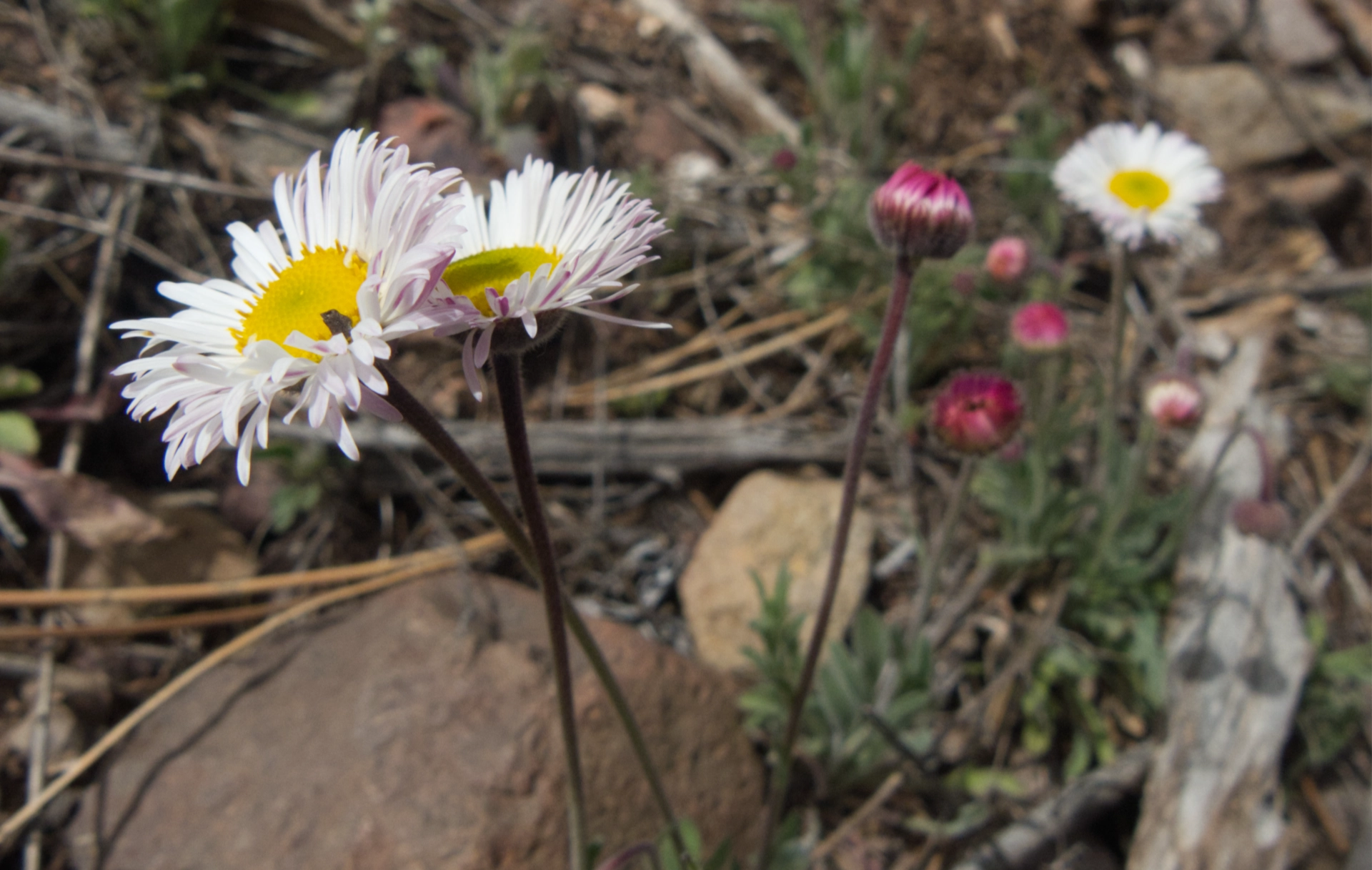
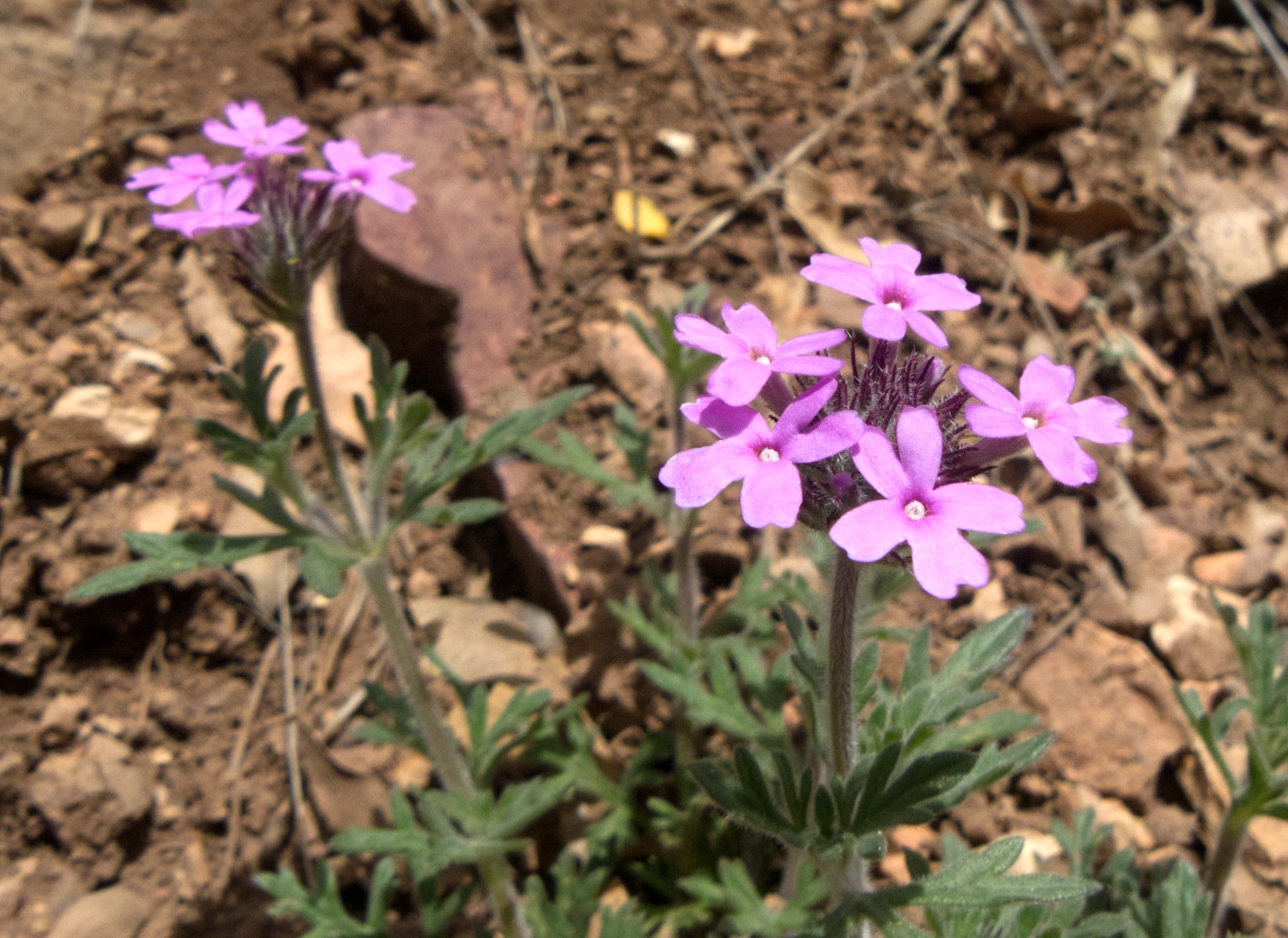
Running Fleabane (left) and Mock Vervain (right)
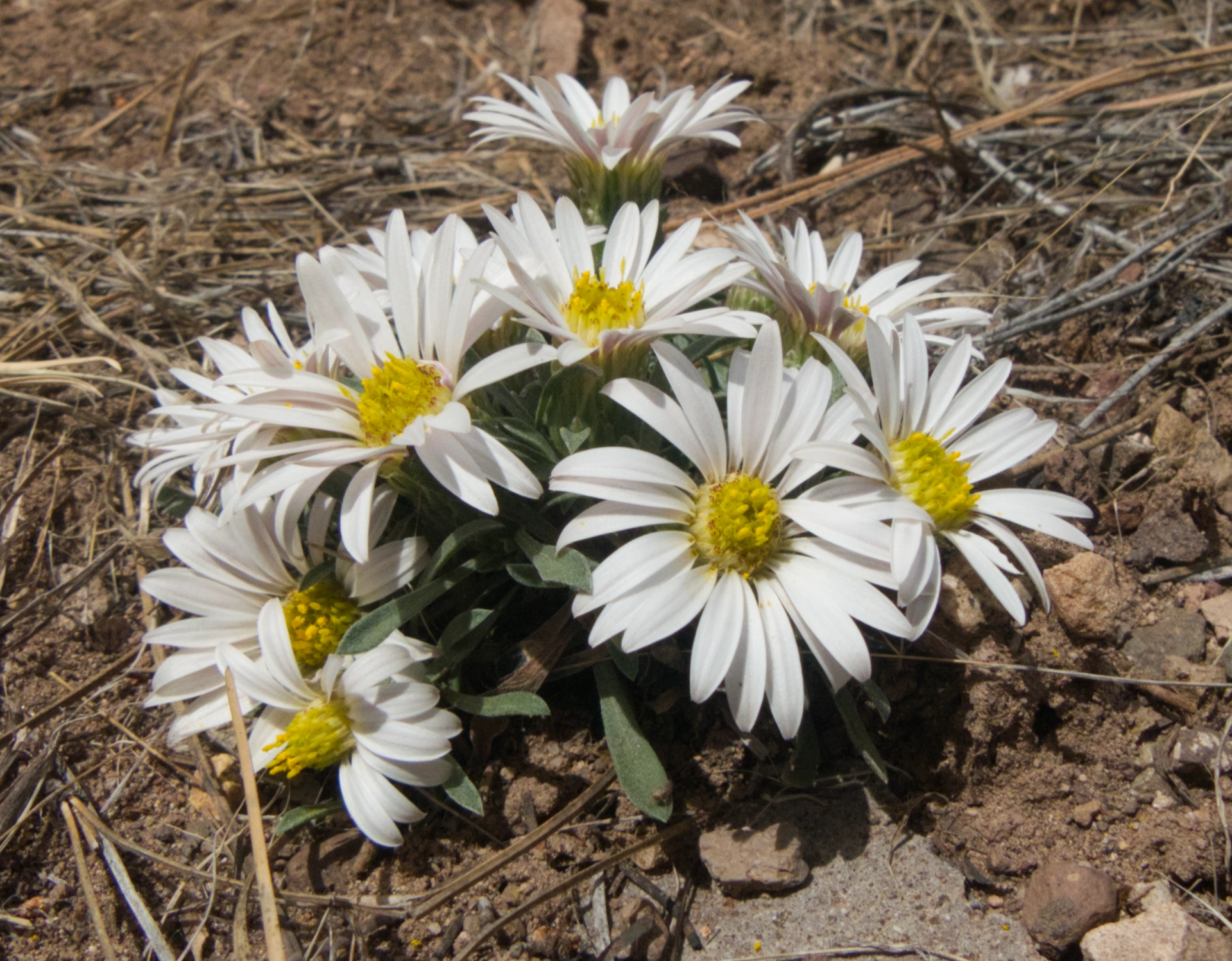
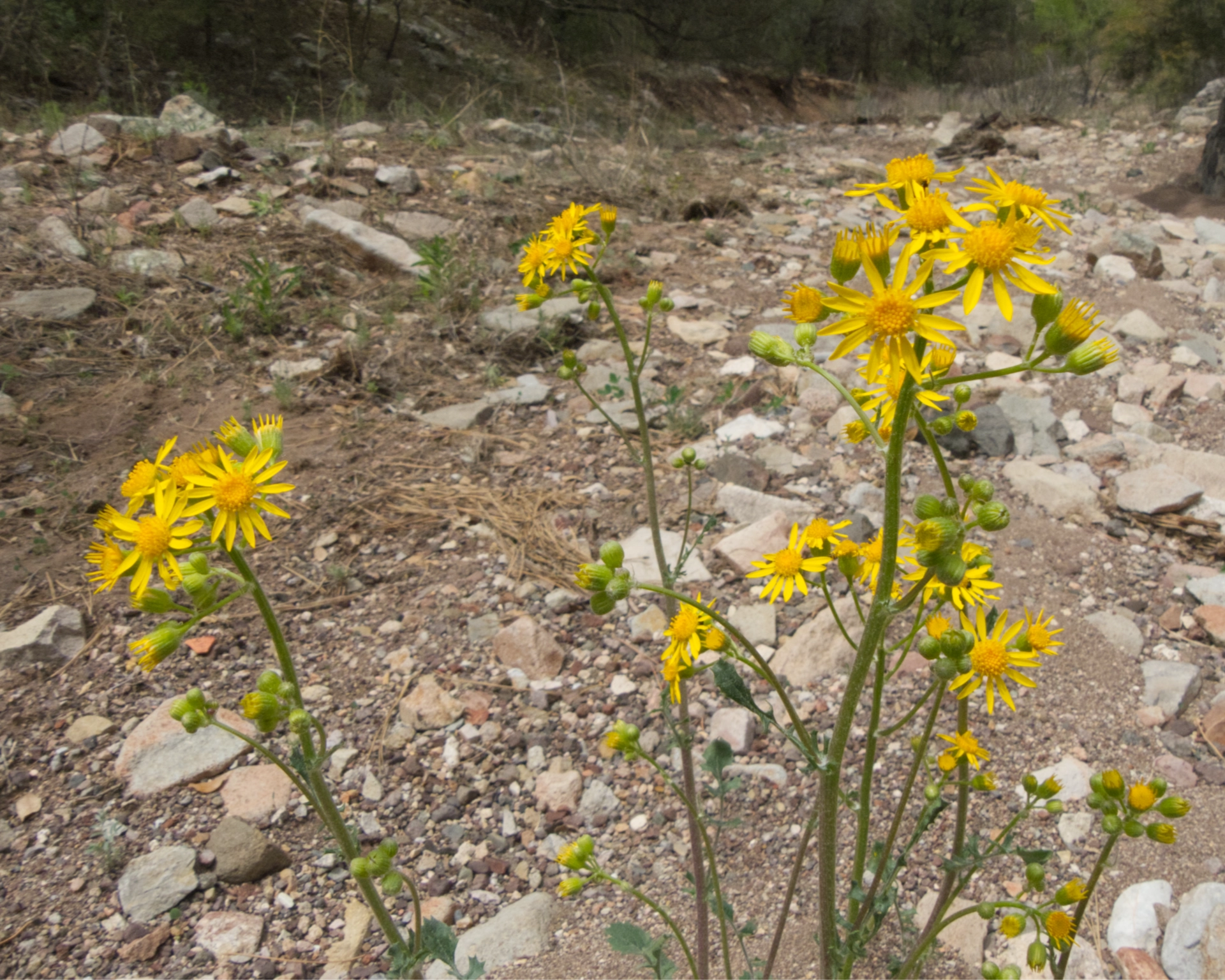
Easter Daisies (left) and New Mexico Groundsel (right)
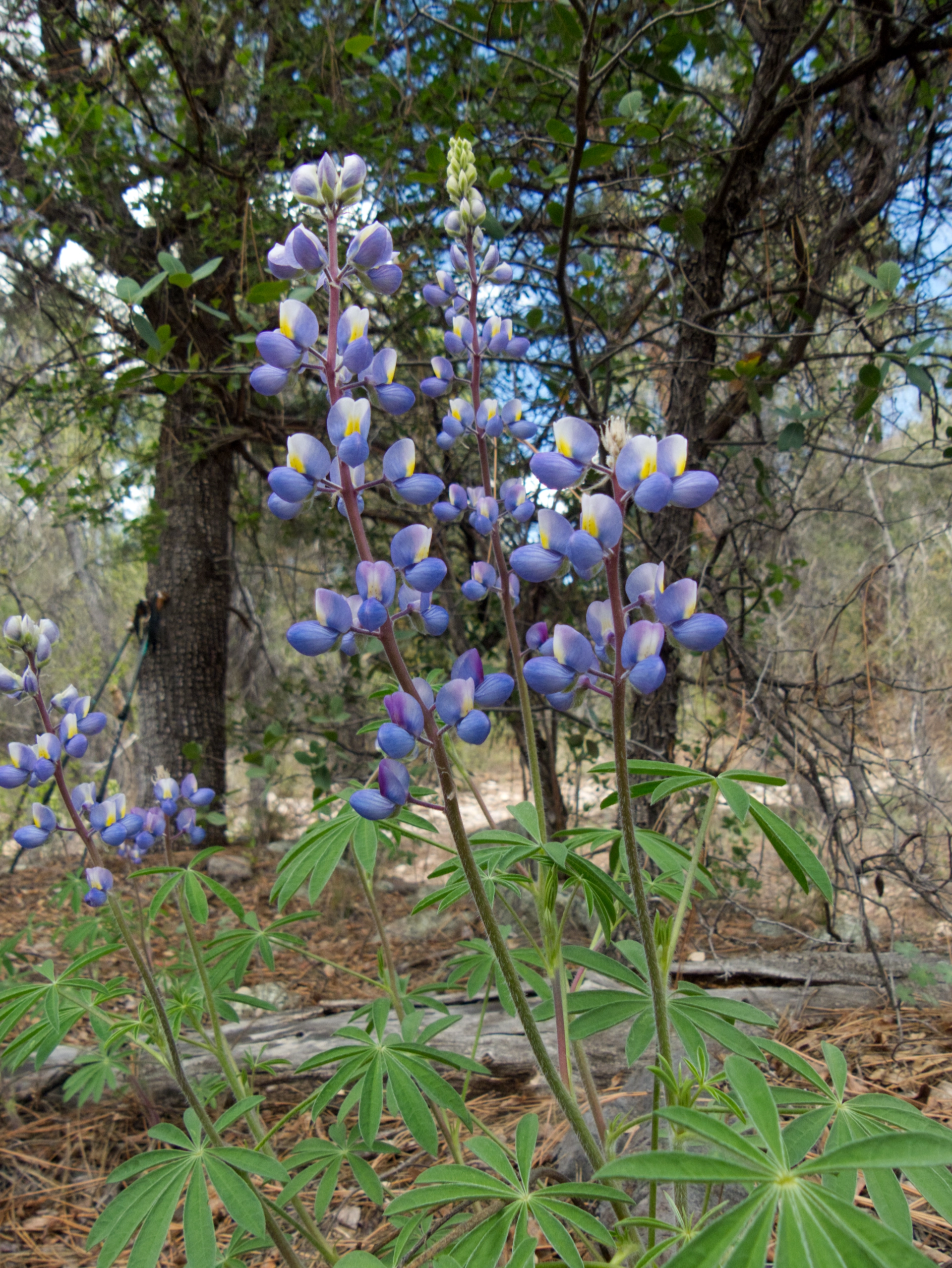
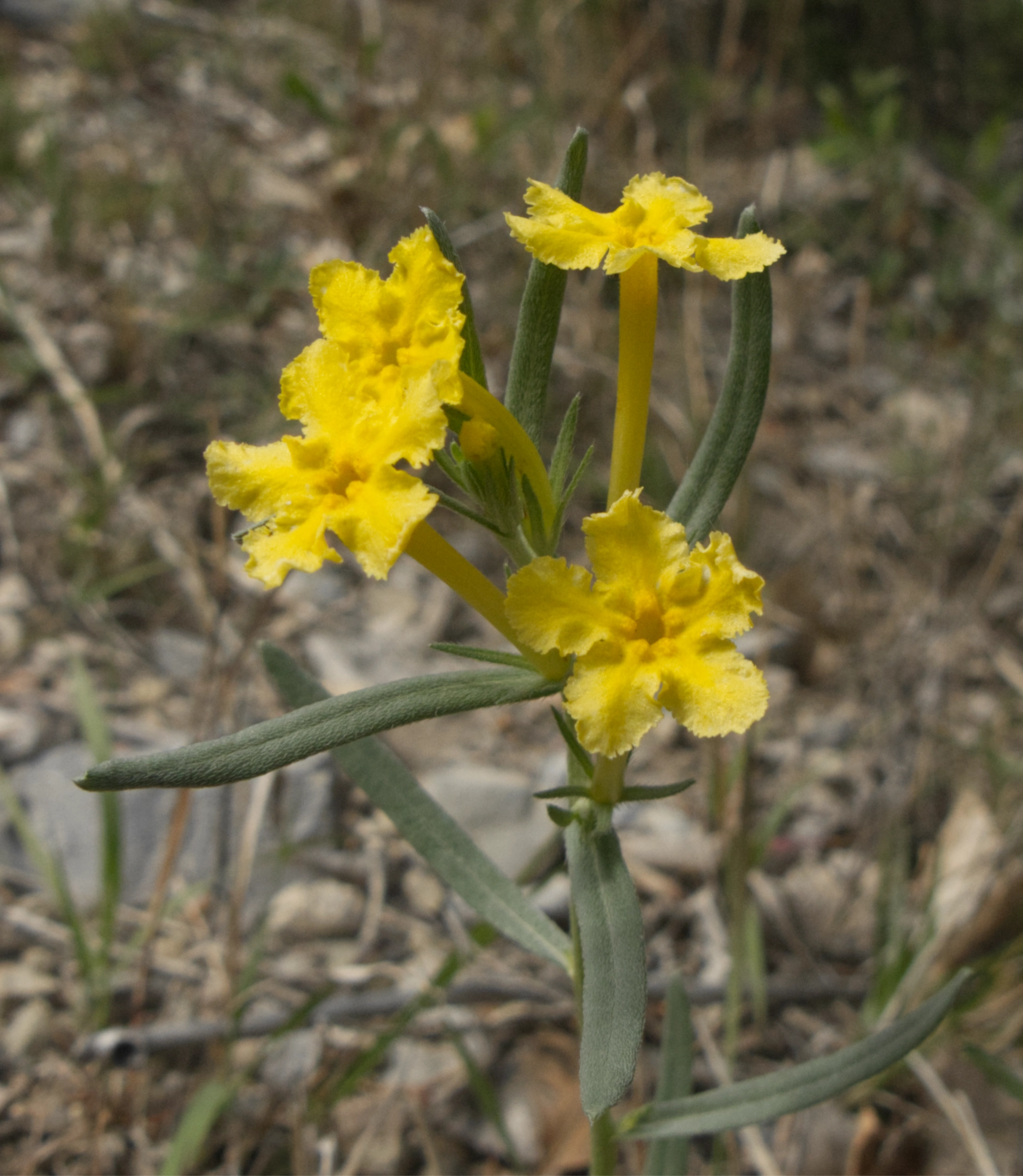
New Mexico Lupine (left) and Narrowleaf Puccoon (right)
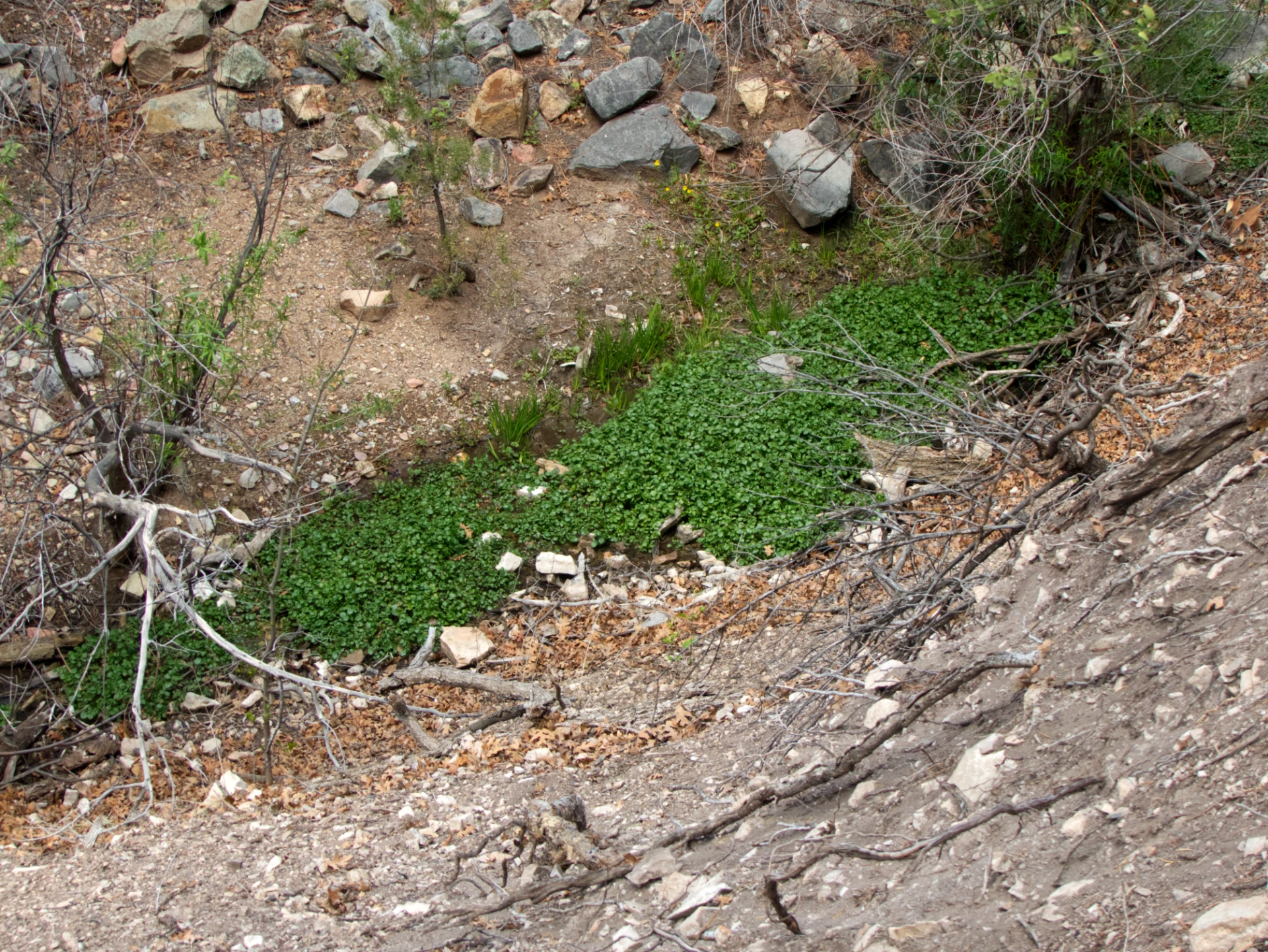
This creek was always dry on previous hikes, so we had no idea that farther downstream, there would be running water. Right where the old topo map showed a spring in a side canyon, the stream began flowing nicely. Intrigued, we bashed our way up the side canyon in search of the source.
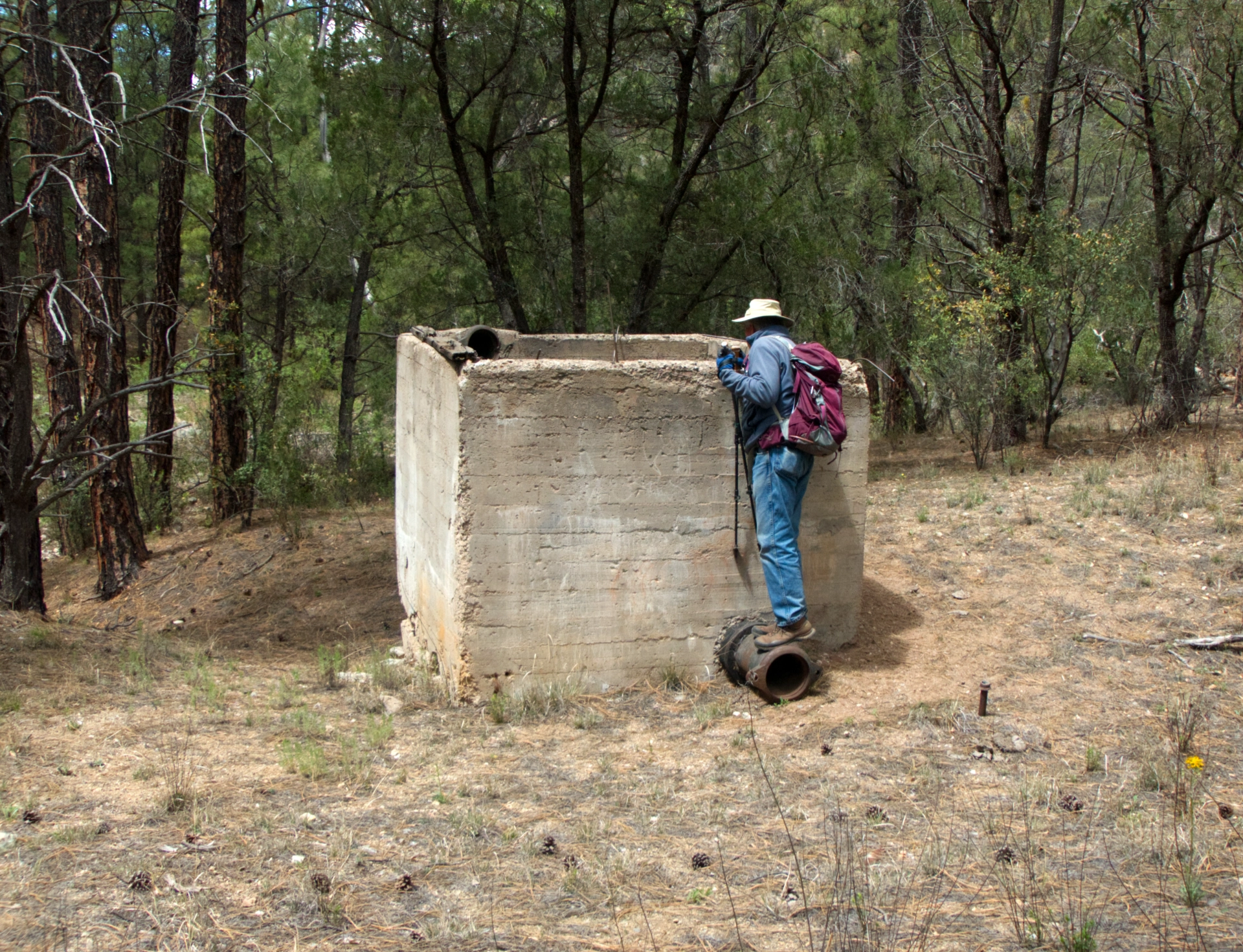
This water source was apparently well-known. A six-inch pipe runs the length of the canyon, interrupted by at least two of these structures, which might have been used to regulate pressure or to relieve trapped air in the pipeline. What was the ultimate destination of the pipeline? Was there a mining operation in this canyon?
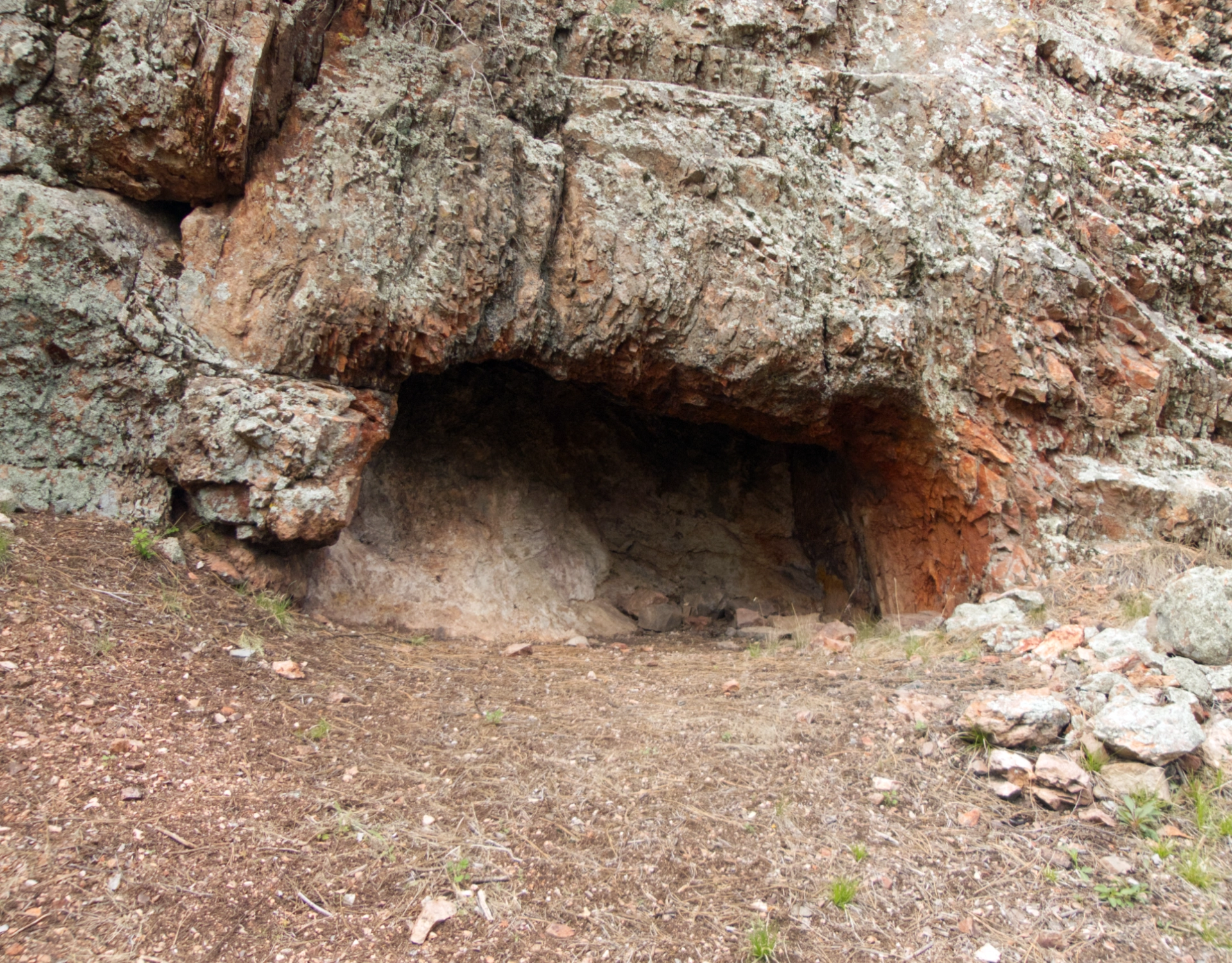
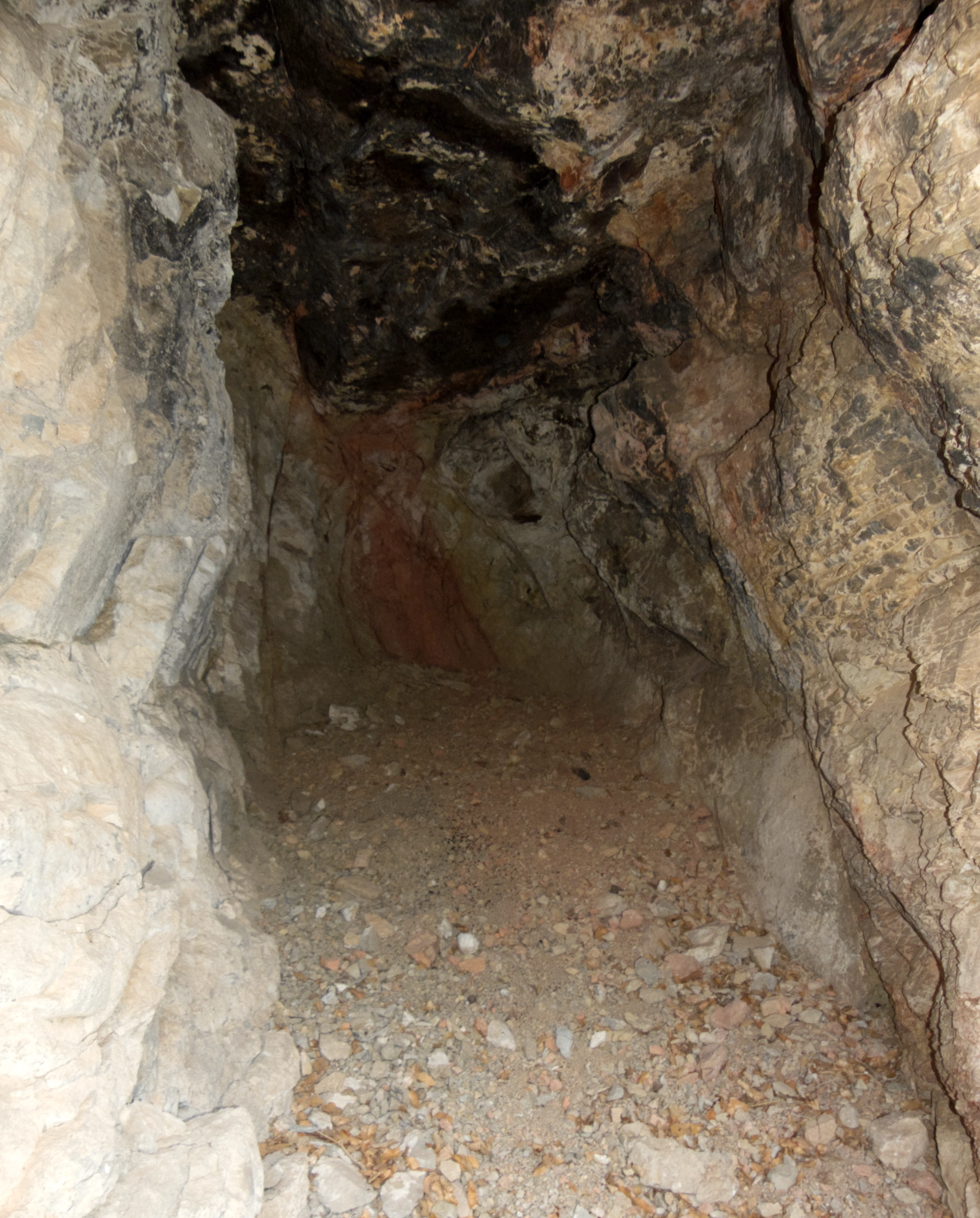
More canyon mysteries! Caves and/or exploratory mines along the trail. Both have blackened ceilings.
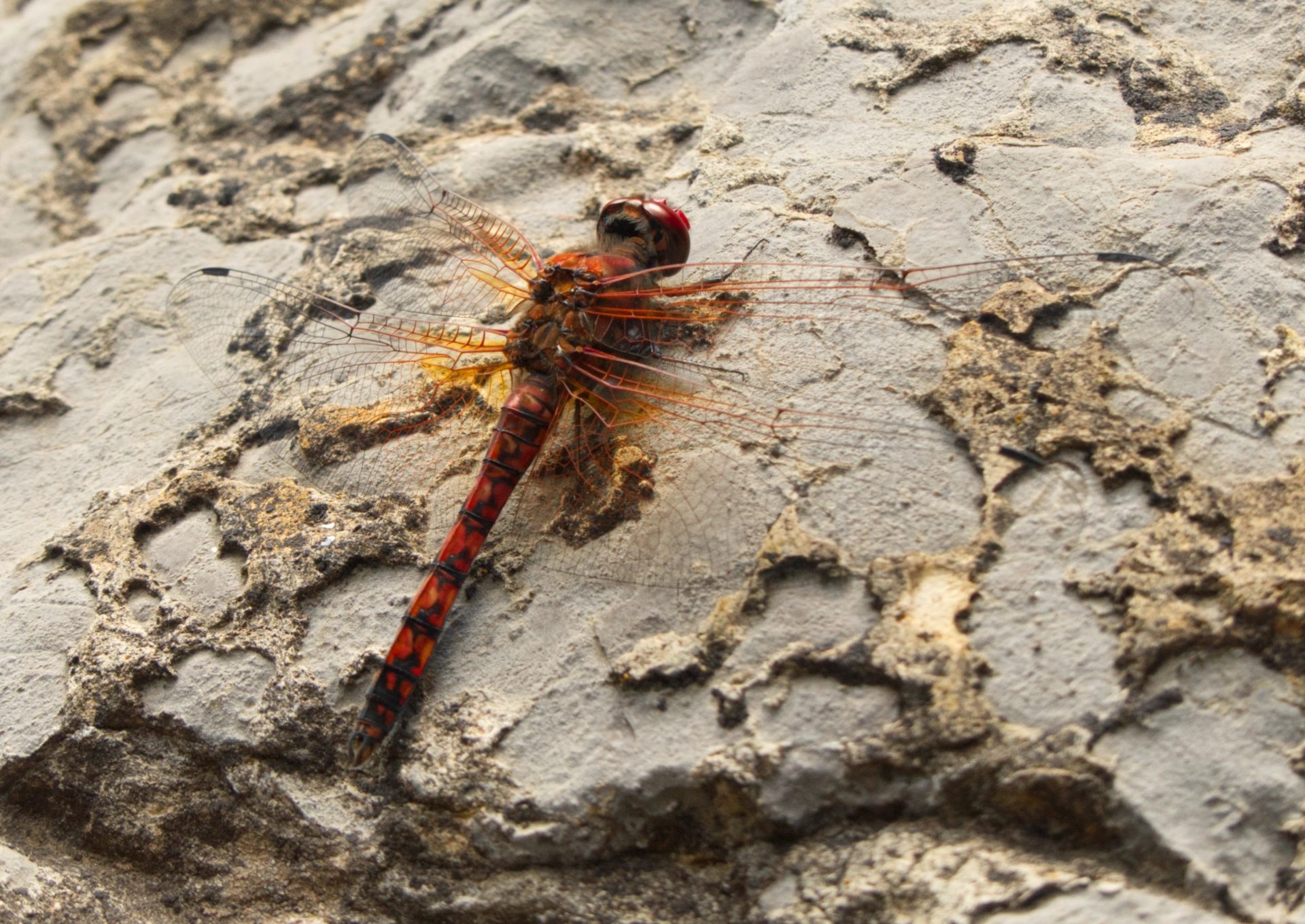
Red Rock Skimmer near our lunch stop.
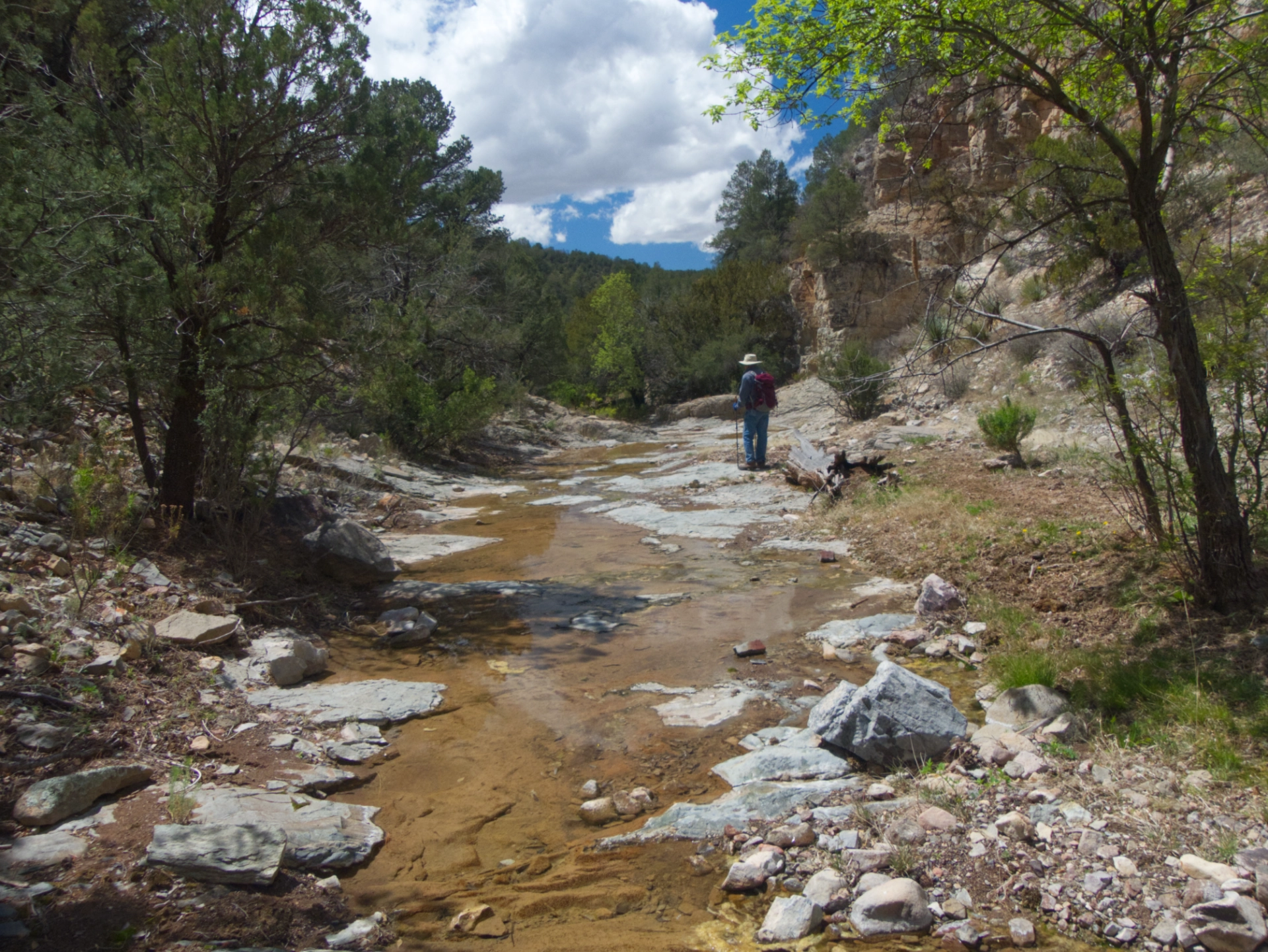
About 1¾ miles downstream from camp, the canyon walls soar to nearly 400 feet high, and the water flows over a terraced stone streambed.
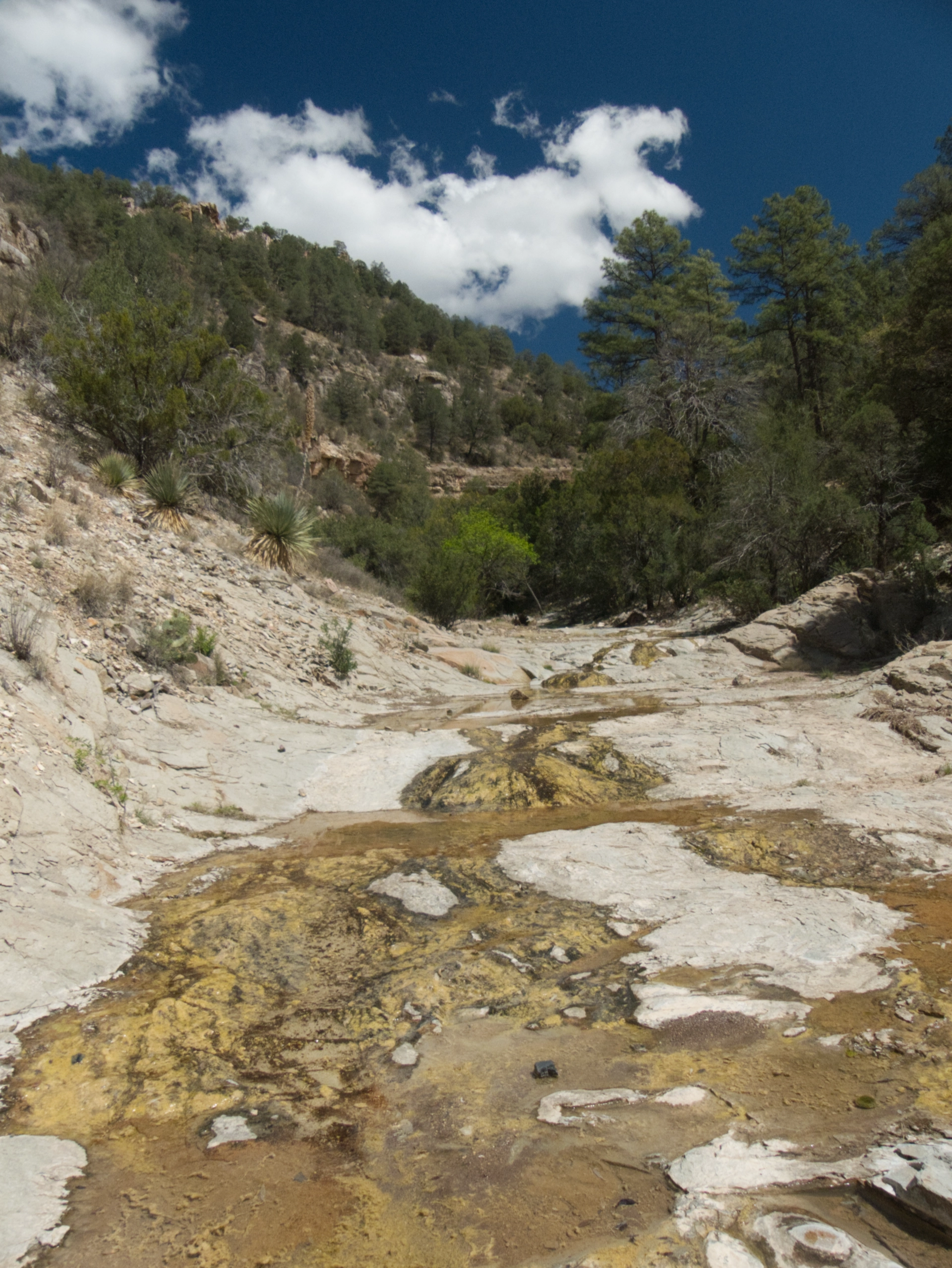
A feast for the senses!
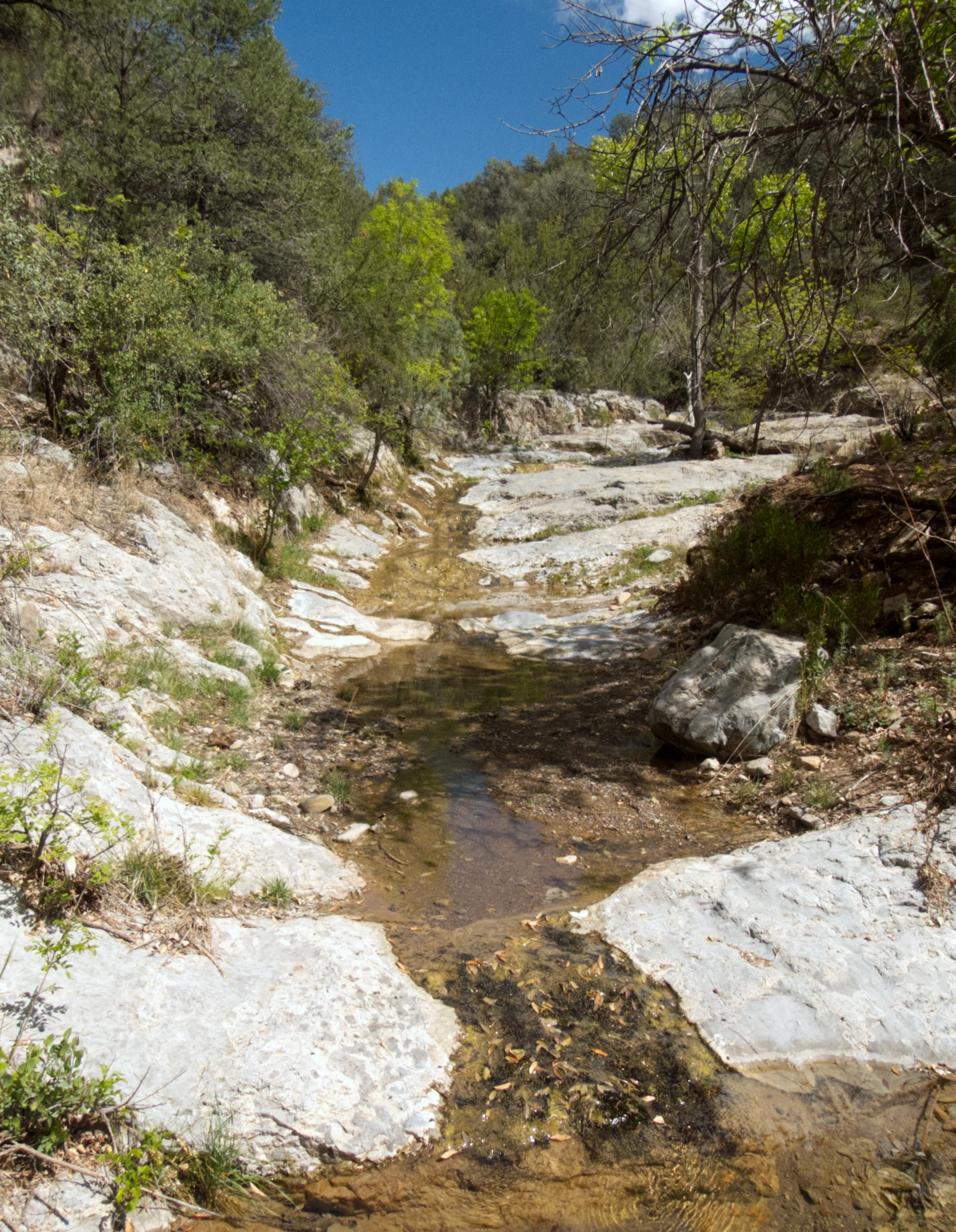
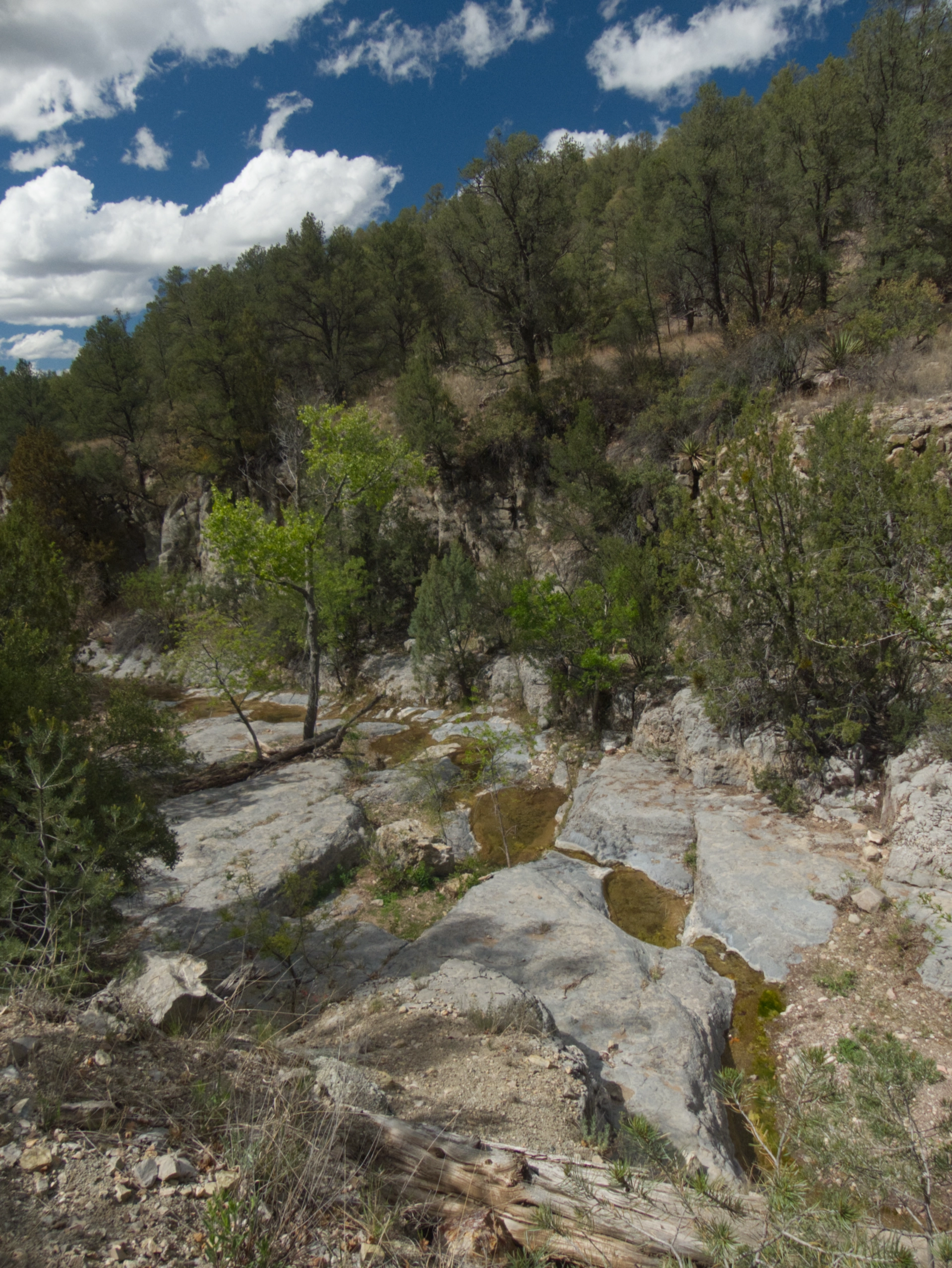
Cascading pools, strung together like beads on a necklace.
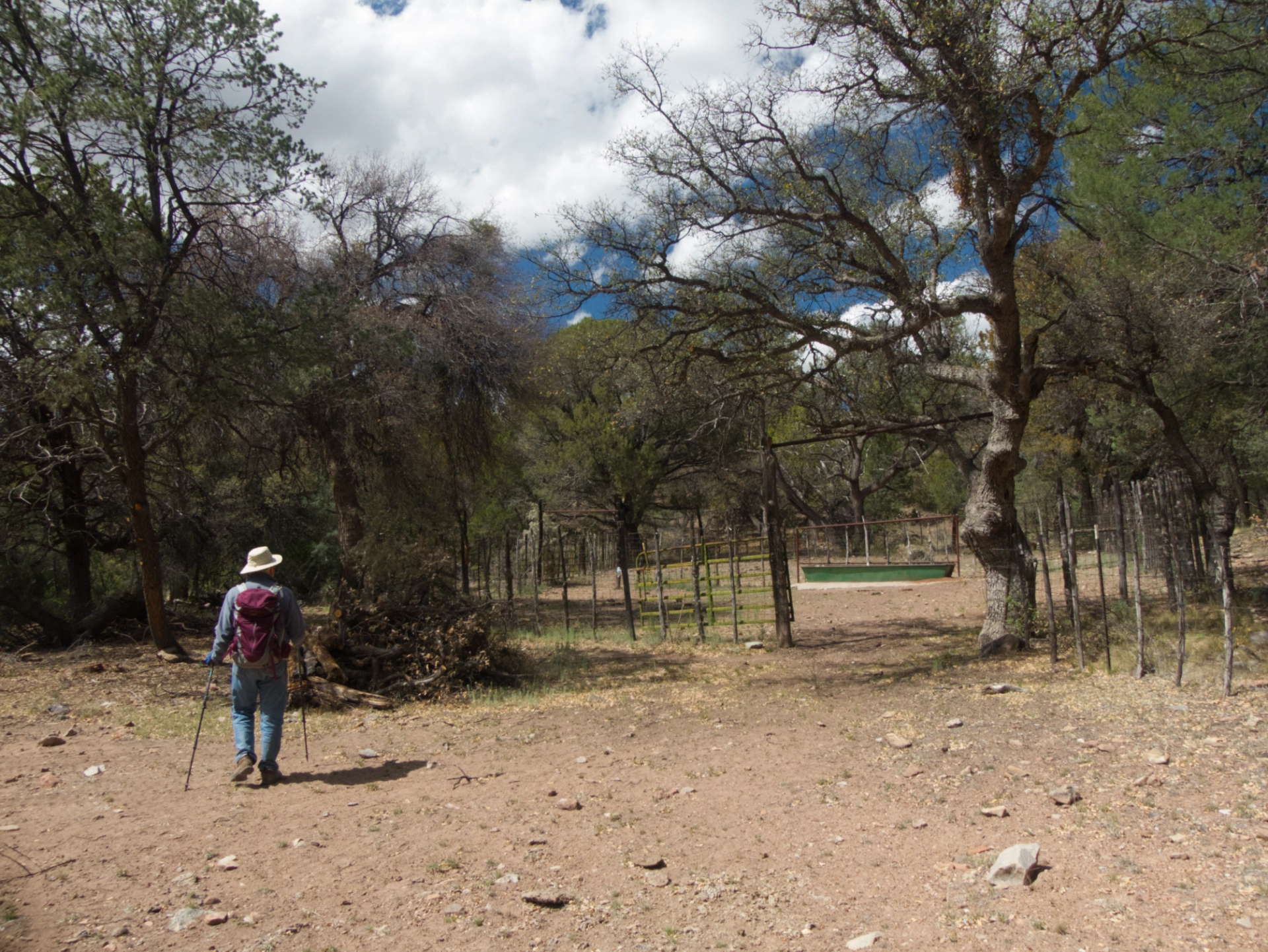
Around the two-mile mark, we reached the second of two springs.
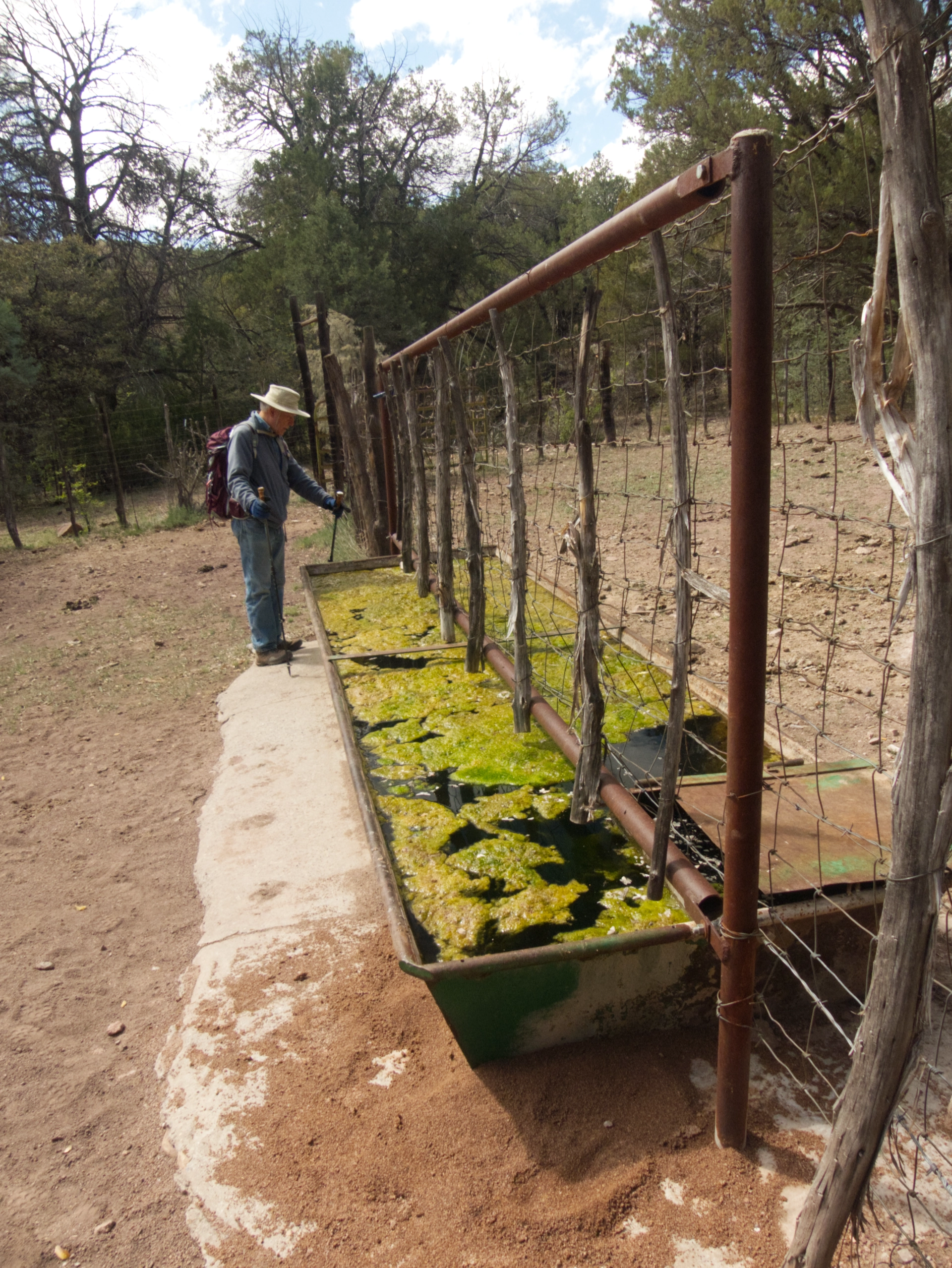
This one was entirely corralled into a cattle tank controlled by a float valve.
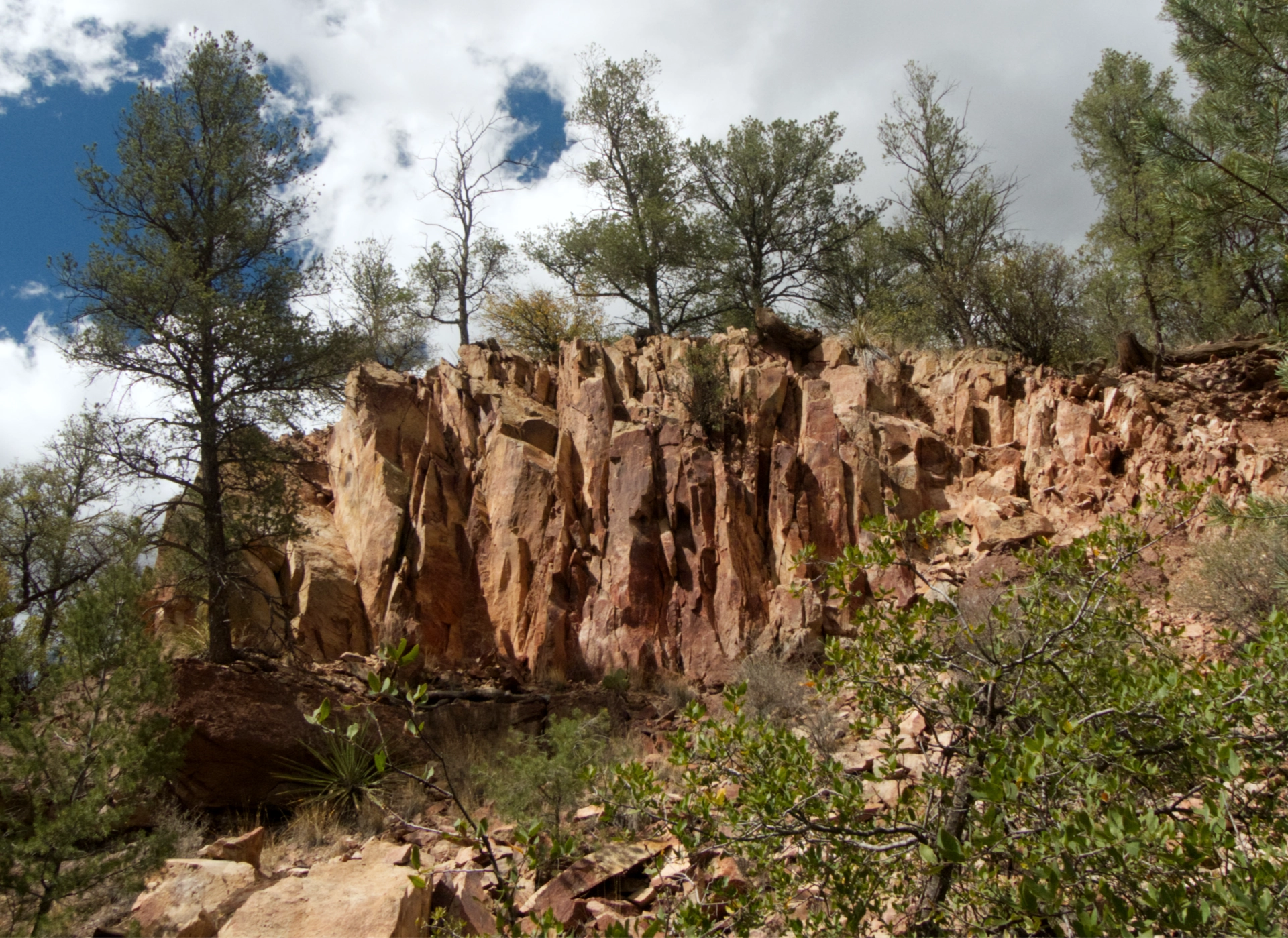
At 2¼ miles the canyon begins to flatten out. This was our turnaround point, since we were approaching an inholding of private property.
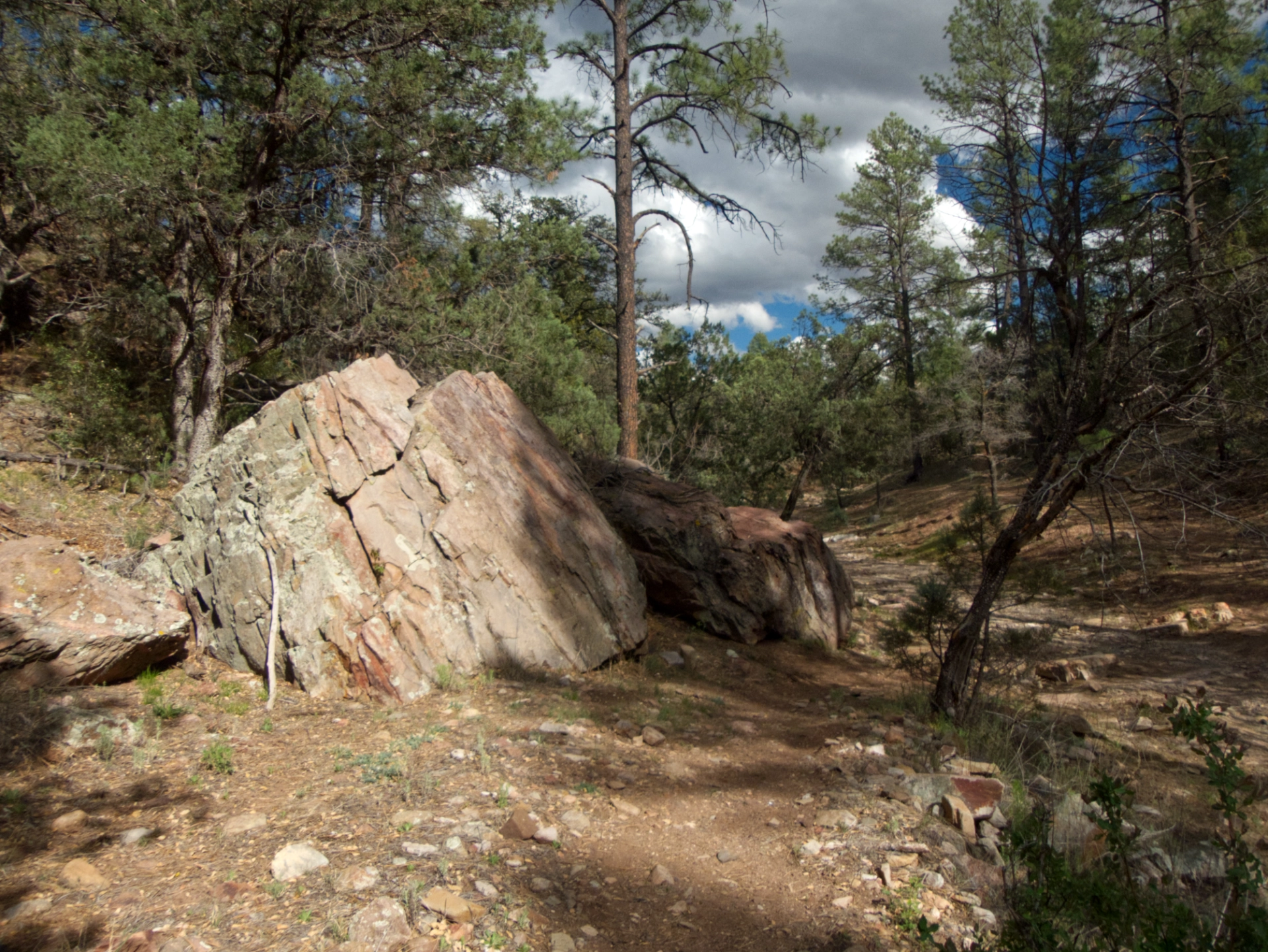
We trekked back to camp in lowering light, very happy with our day.
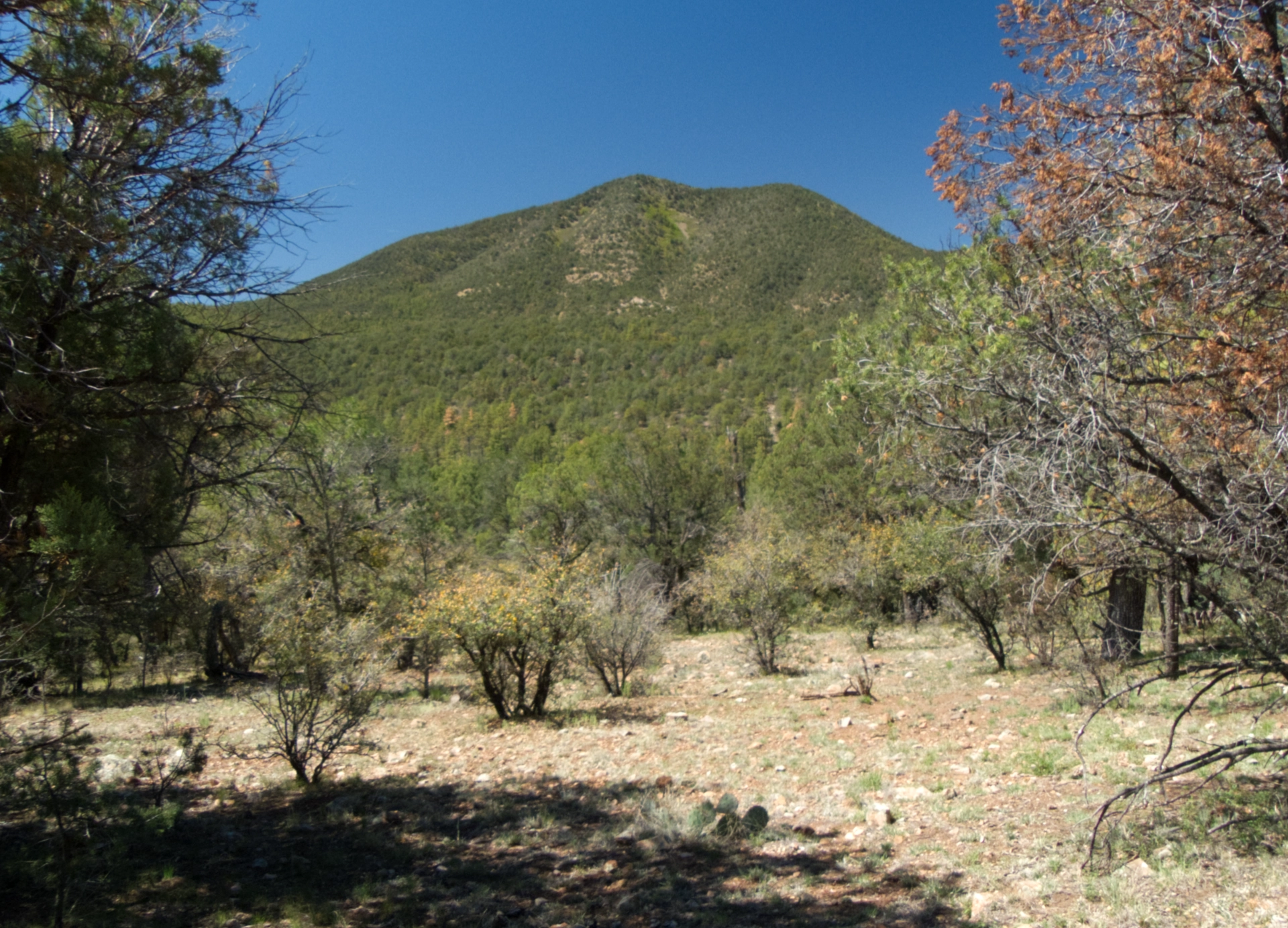
In the morning before returning to town, we bushwhacked through the hills all around camp, just following any pathway or remnant of an old road up and down through the braided washes.
We ended up at an actual working windmill. You don't see these very often! Listen to it sigh and moan as the sucker rod pulls water into the cylinder. Ever wonder how a windmill works? The Aeromotor Windmill Company is still in business, sells both parts and complete windmills, and has a nice explanation on their website.
