Restoring the East Railroad Canyon Trail
May 8-10, 2026
Fourteen years ago, with the Tucson Backpackers we backpacked to Hillsboro Peak and returned via Railroad Canyon. And I wrote these fateful words:
Almost immediately we found ourselves in a lush Ponderosa pine forest virtually untouched by the fires that have raged through much of the Southwest in the last decade.
One year later, the Silver Fire tore through this area, incinerating over 138,000 acres. Our "untouched forest" was reduced to blackened matchsticks. Heartbroken, we stopped hiking the upper sections of Railroad Canyon. As the years passed, I completely forgot about some of those trails, including the East Railroad Canyon Trail.
When Gila Trails posted a work trip to Railroad Canyon, I eagerly signed up.
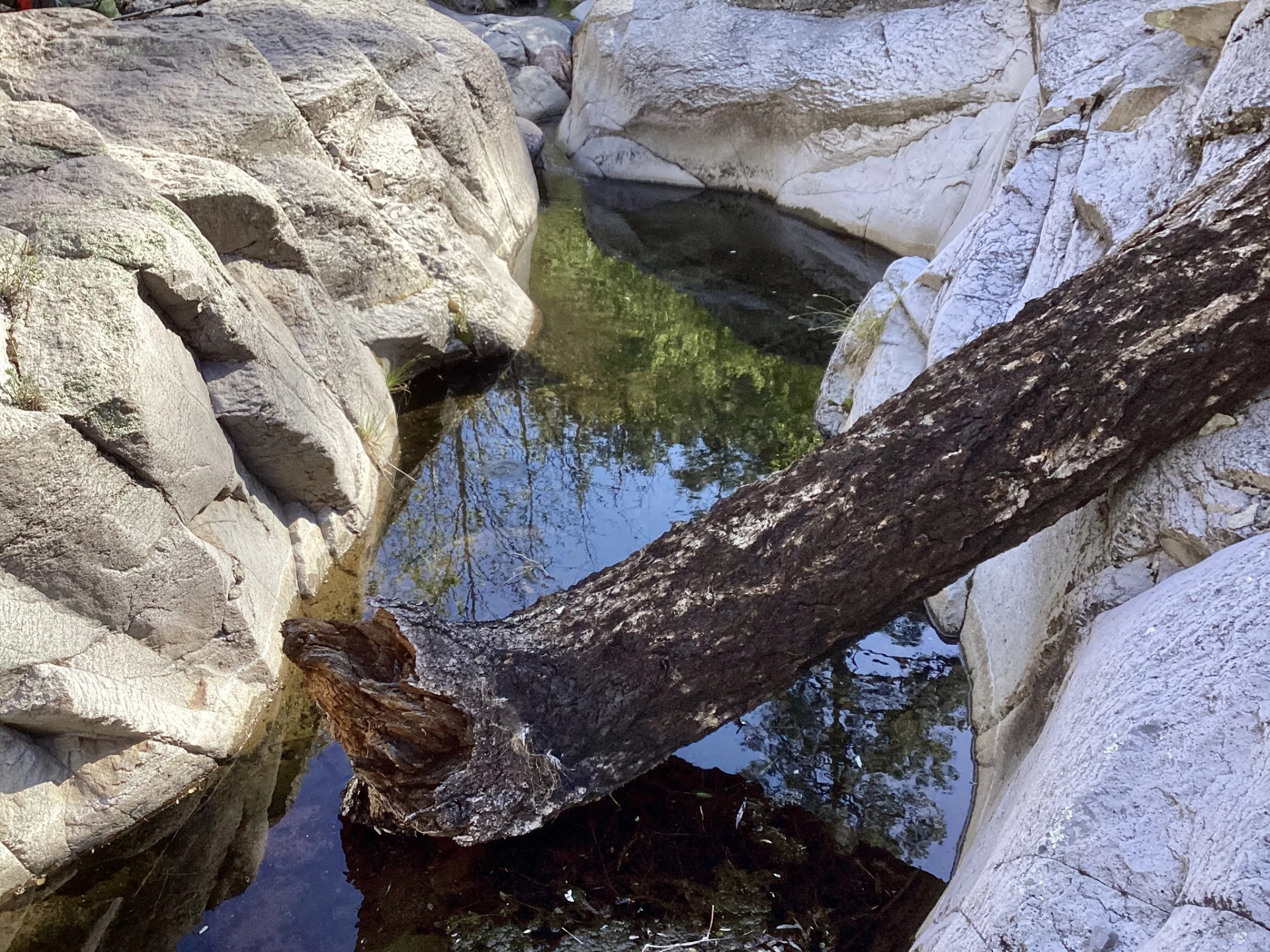
As is often the case, I was the oldest person on the work crew, and lagged far behind the rest of the group. But the lower sections of Gallinas Canyon and Railroad Canyon are popular summer hikes with our Gila Hikers hiking group. So I knew the area, and plodded along at my own pace, stopping briefly to photograph one of our favorite swimming holes along the way.
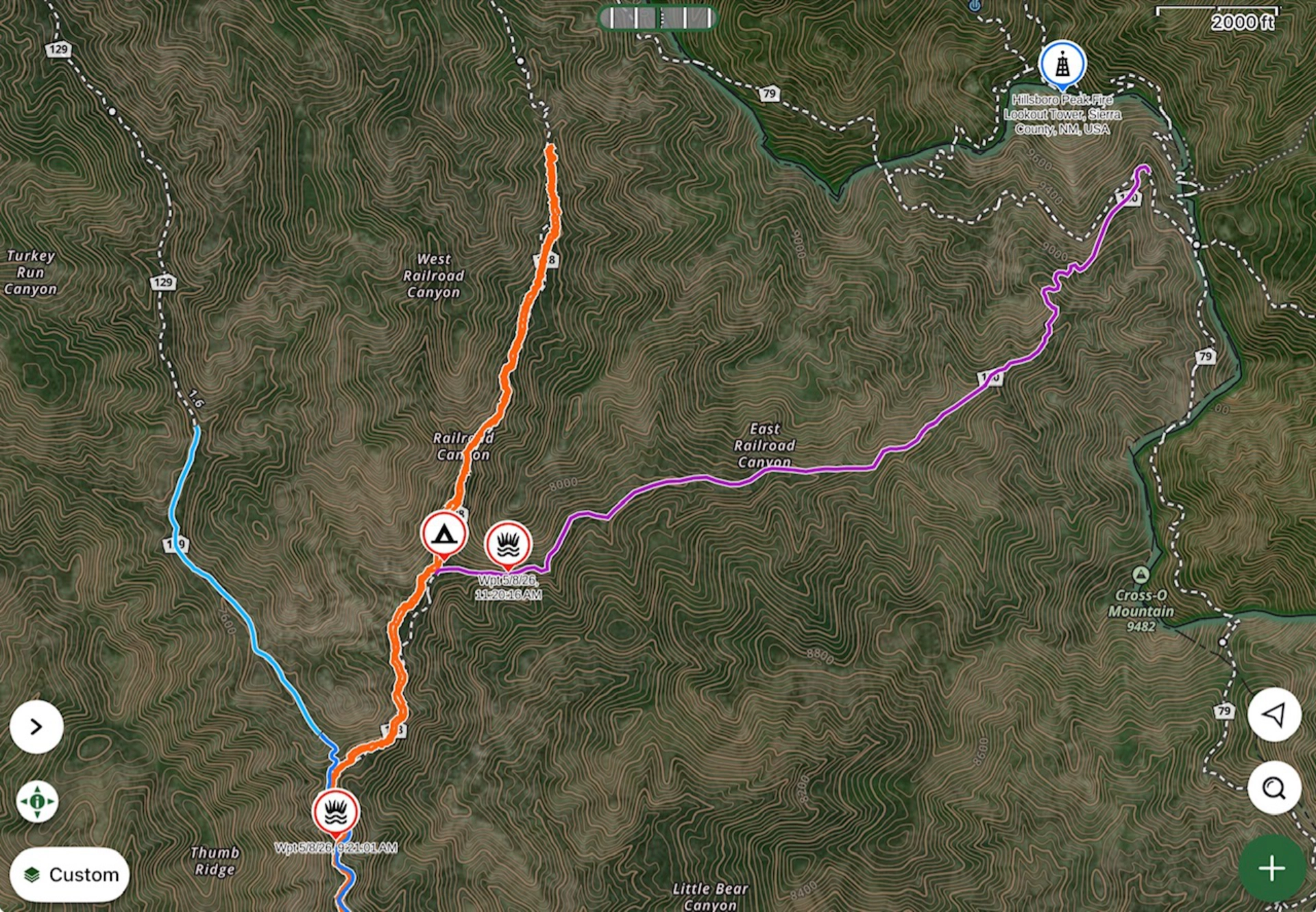
The plan was to begin work about a mile past the junction, where they'd left off the previous year. I reached the junction and kept to the right. And I hiked. And hiked. And hiked. But there was no flagging, nor any sign of my crew. Finally I stopped and checked my GPS. Oh no, that couldn't possibly be right! It must still be searching for a satellite! But the GPS was correct, and I was in the wrong canyon — about 1½ miles up the wrong canyon. Mortified, I ran most of the way back down Railroad Canyon, and finally located the ghost of a trail behind the sign at the junction of Railroad and East Railroad Canyons.
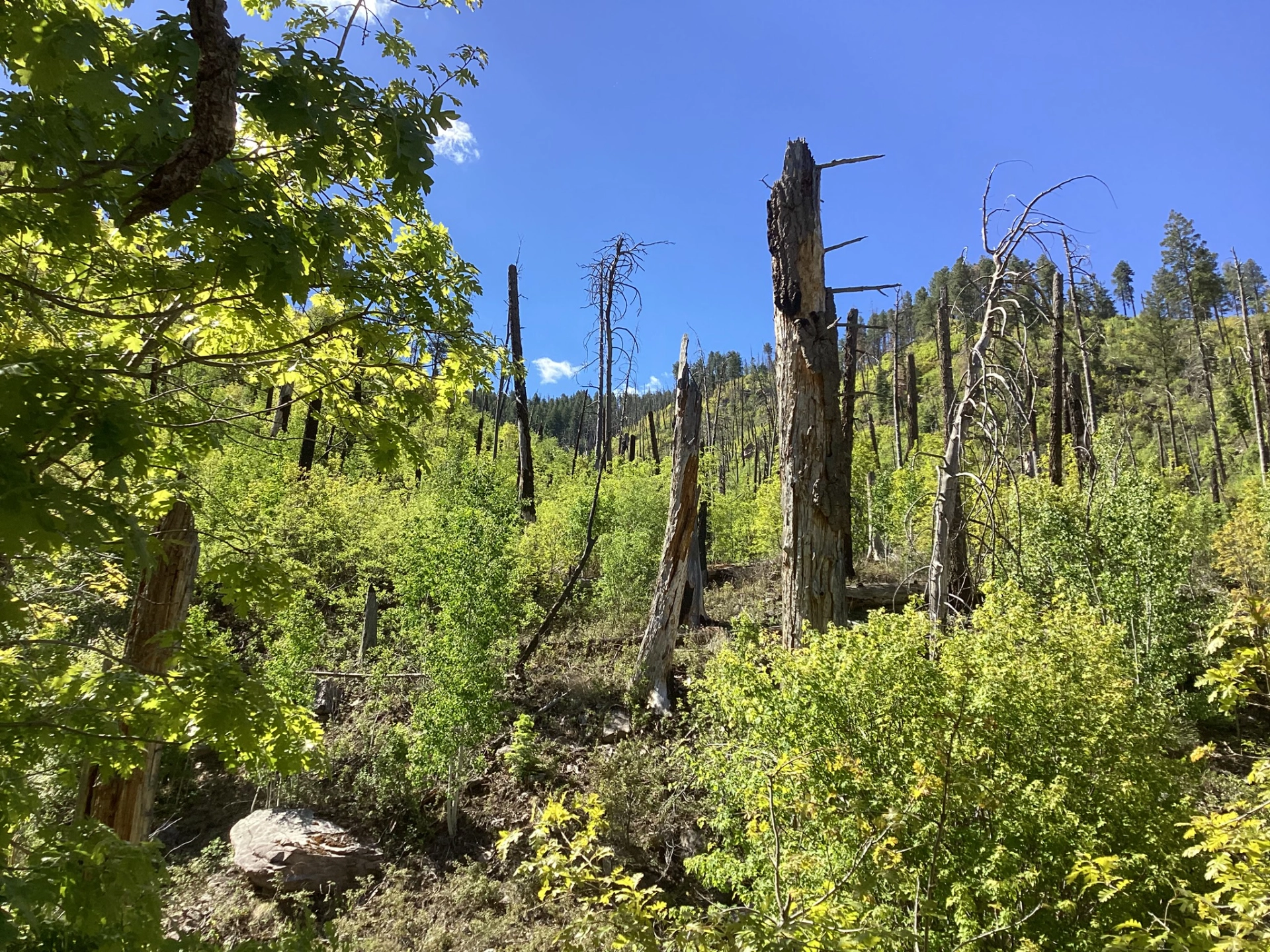
By the time I finally caught up with the crew, I had already hiked six miles. The last mile was in very difficult terrain. The East Railroad Canyon Trail was in the heart of the Silver Fire, and hasn't seen any maintenance until the last year. The once-popular route was now a mere "concept of a trail" — a jumble of charred logs, boulders and rampant locust trees. I wondered why the sawyers hadn't preceded us and cut up the larger logs, but we needed to clear and mark enough of the trail to allow them to pass.
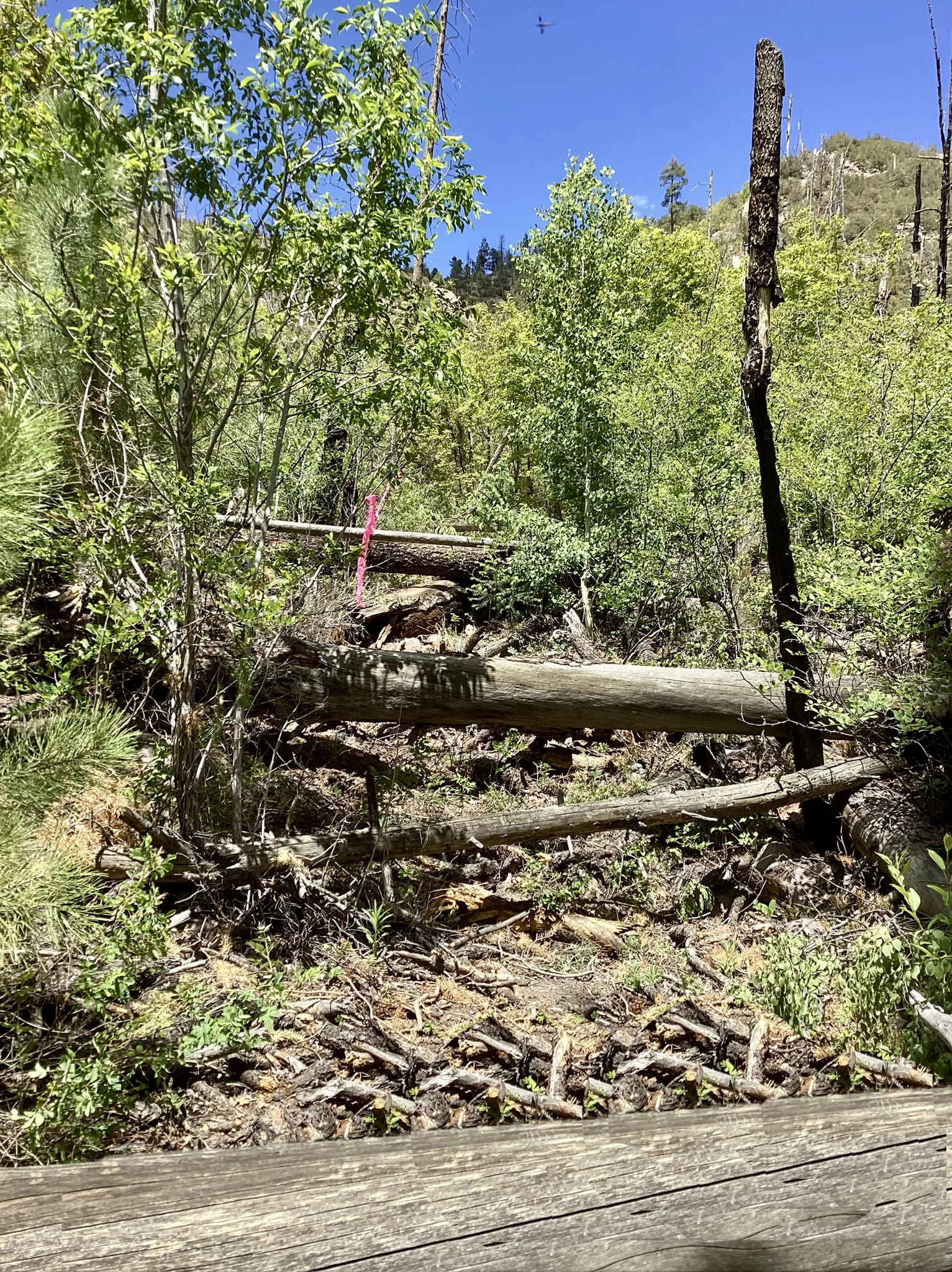
Just walking — let alone doing trail work! — was difficult. Every step required clambering over charred logs and hidden boulders, and pushing through dense brush, often in very steep terrain. I almost turned back when I saw this!
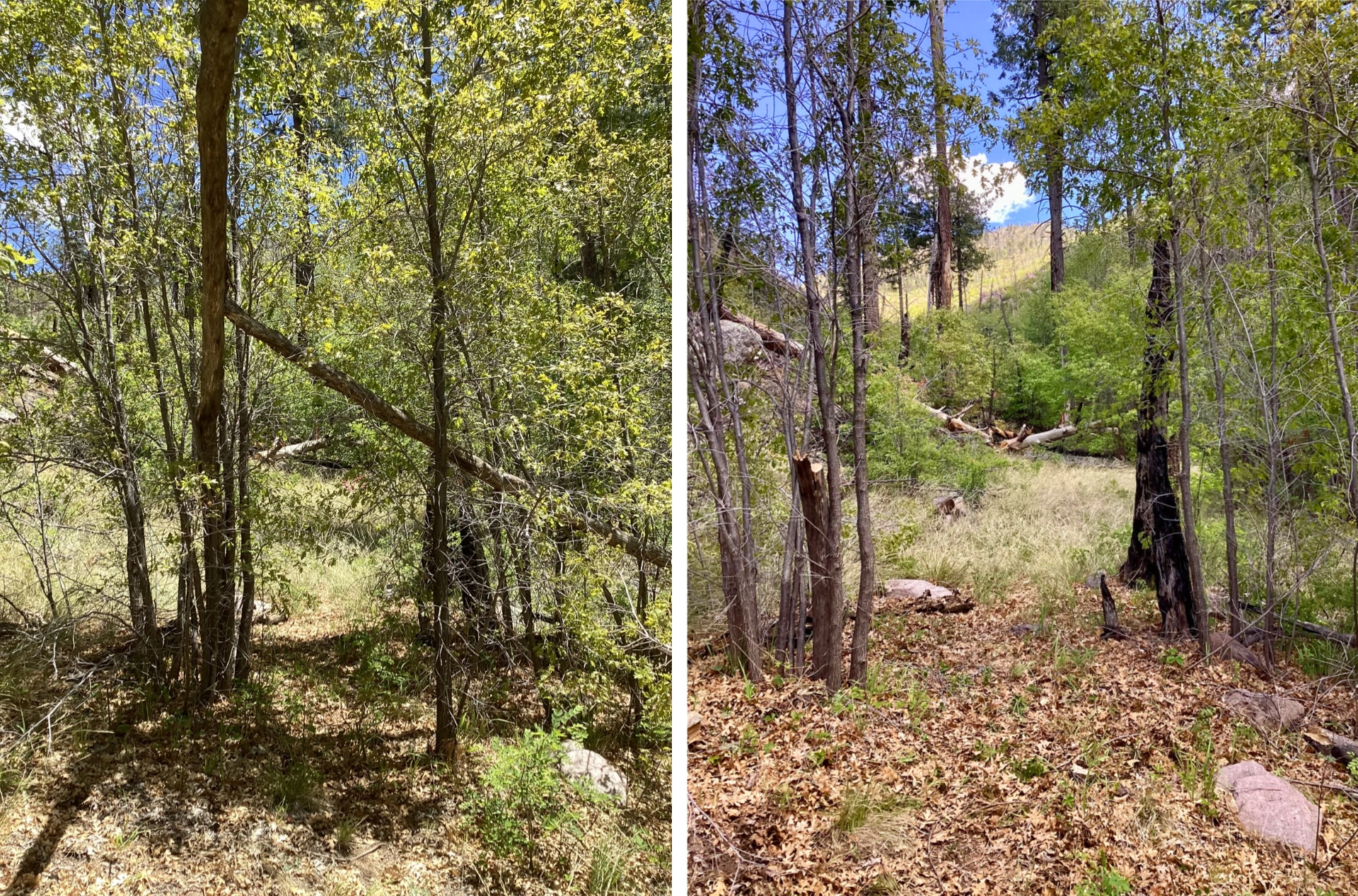
But I picked up my tools and went to work on this tangle I nicknamed "the tunnel". And it was gratifying to see a trail gradually reemerge from the rubble.
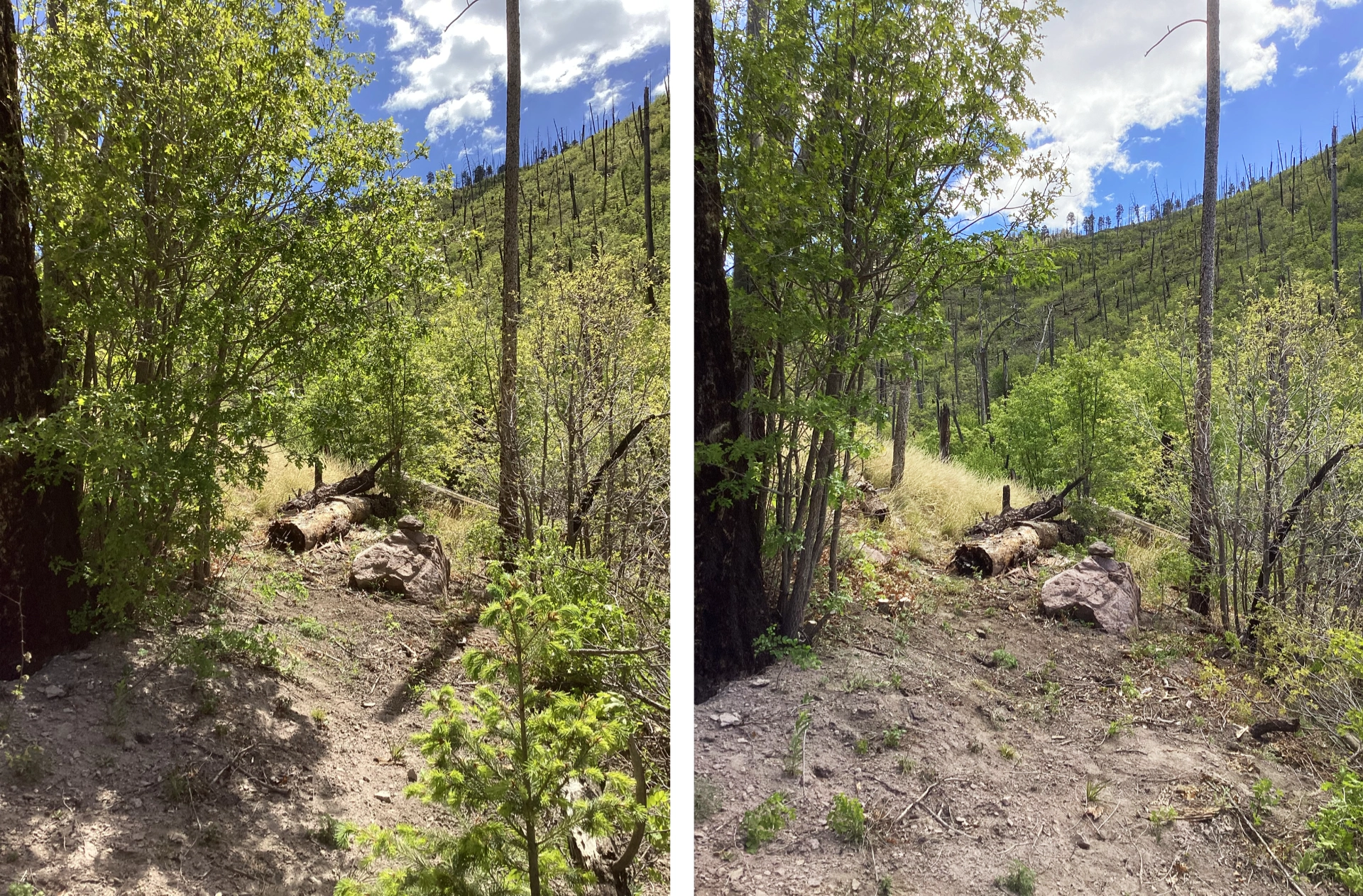
I was wiped out by the end of the day, and woke up very sore and stiff. I suspect I was severely dehydrated, so the next day I made a plan to work more slowly, take more breaks and, above all, drink more water.
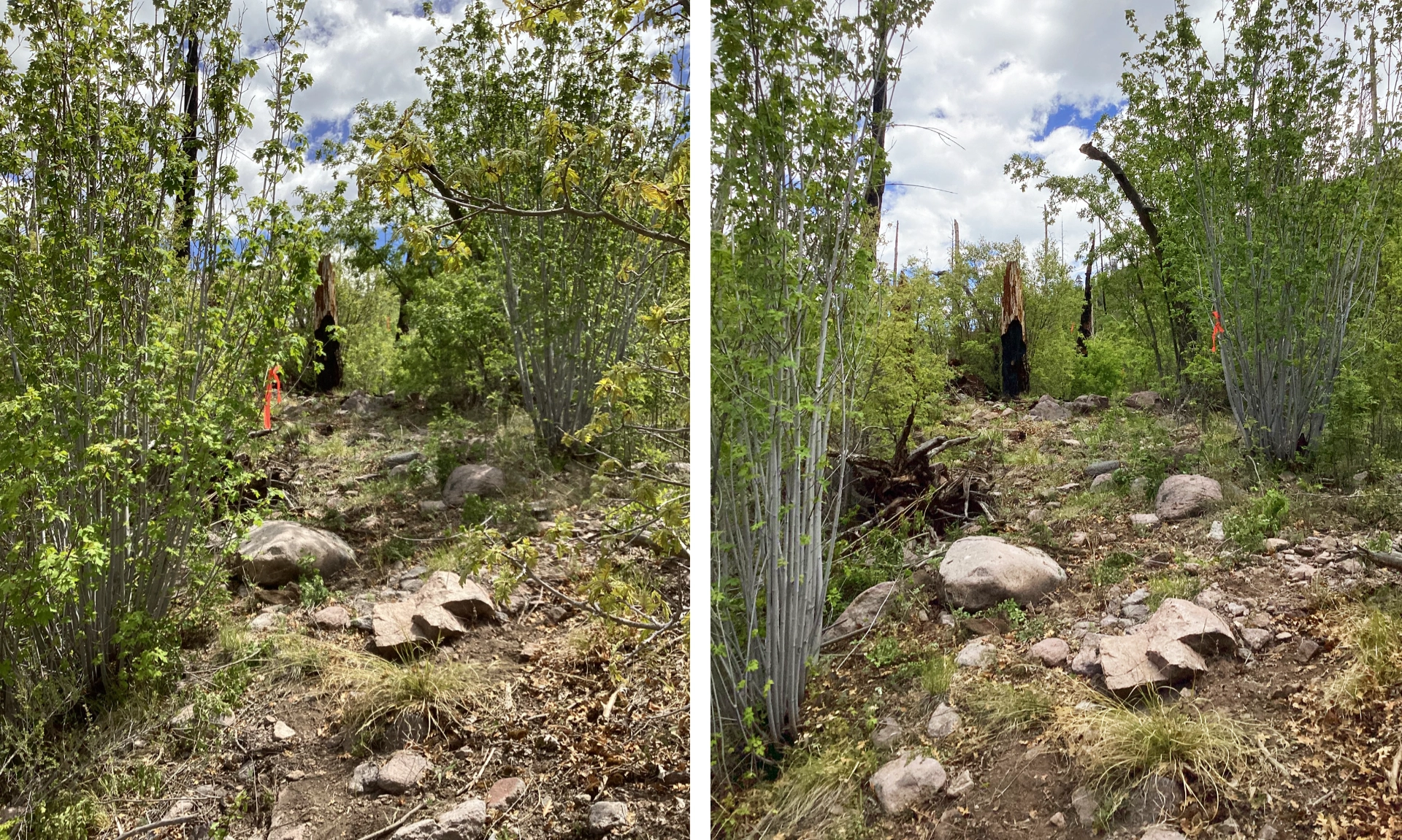
I also experimented with electrolytes. I always thought they were just another health fad. Turns out they really help. Who knew? Well, everyone except me, apparently.
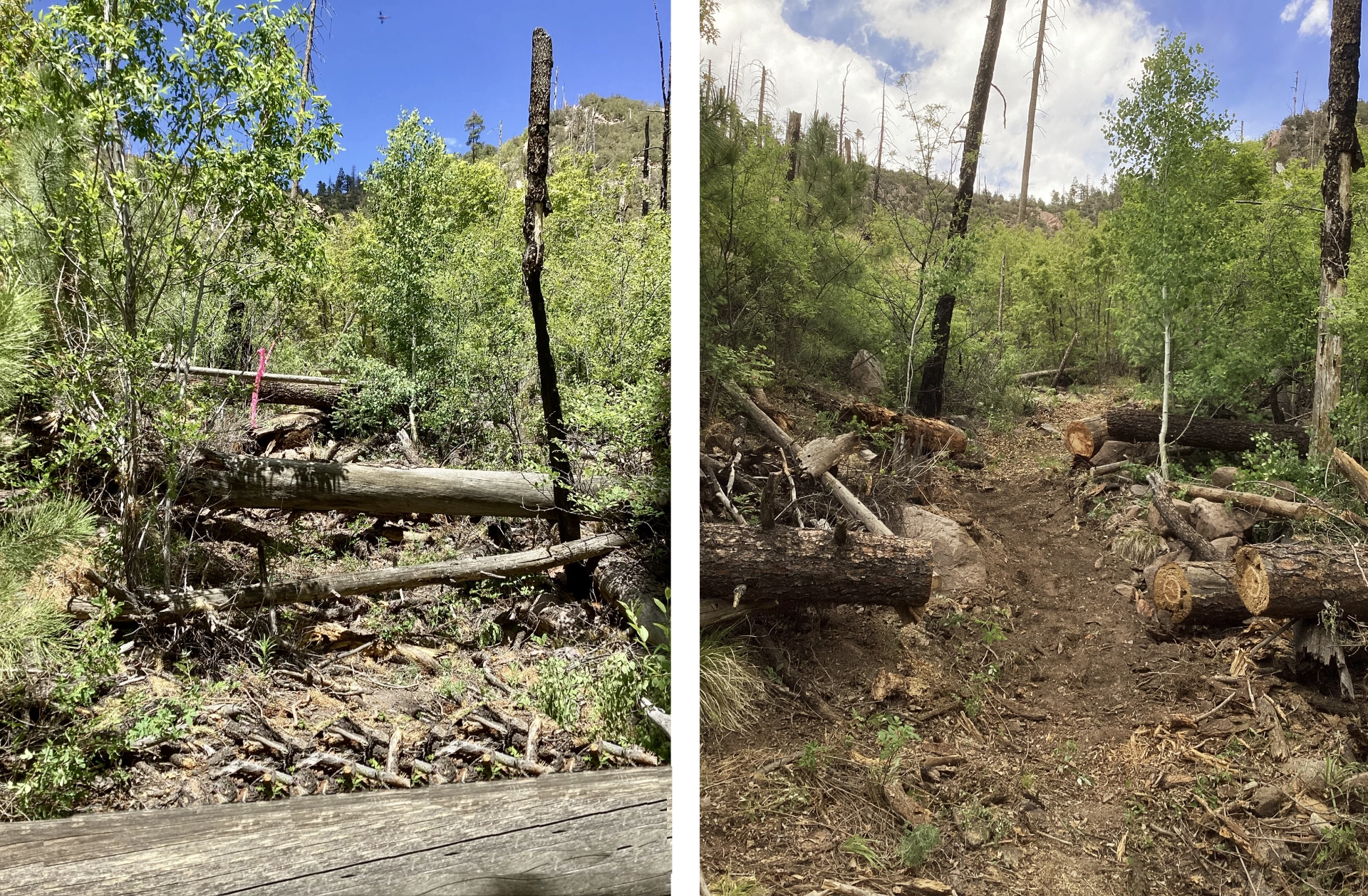
By the end of day 2, we had clawed and hacked our way about a mile up the canyon. The sawyers came through and cut up the large logs. The transformation was astonishing!
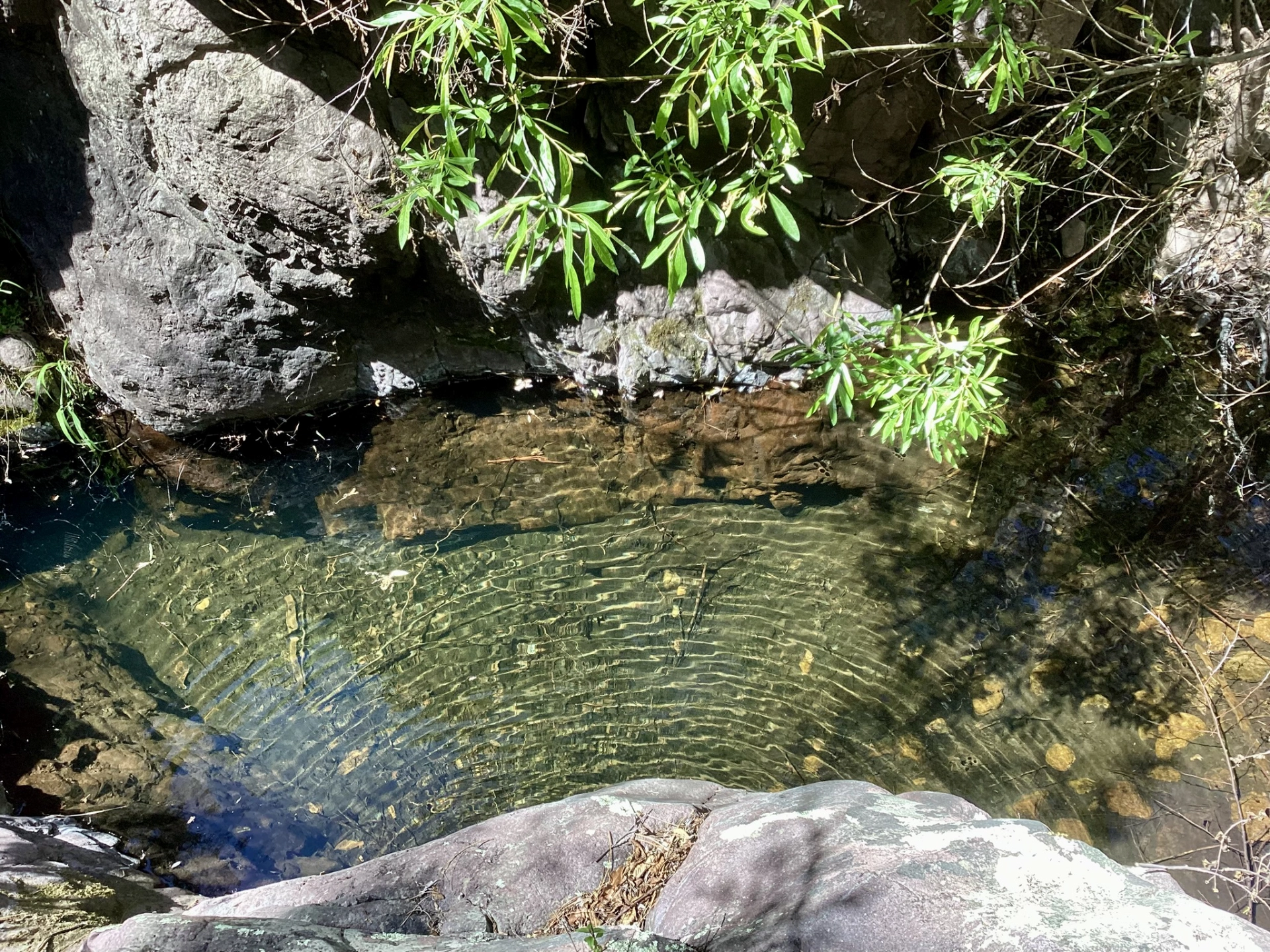
On the way back to camp, I stopped at a nice pool I had spotted the previous day. It was about three feet deep and crystal clear. It felt great to wash away some of the sweat and dirt and sawdust!
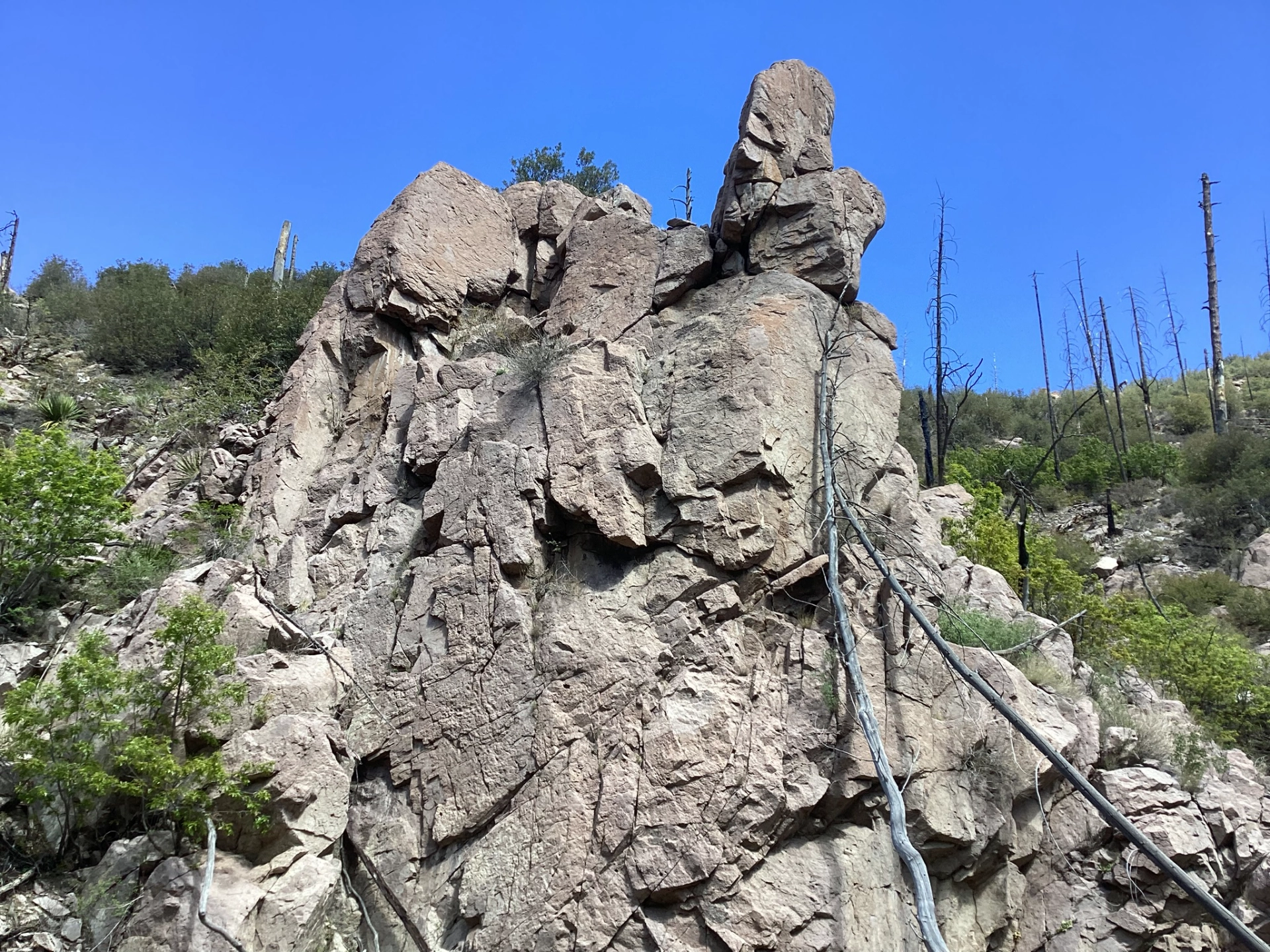
I packed up and went home that afternoon, realizing that between the heat, the difficult terrain and my silly mistake the first day, I was nearing the end of my reserves. But I learned a lot on this trip — about paying attention to my GPS, about staying hydrated and about the forest's ability to recover after a disastrous fire. The East Railroad Canyon Trail is on it way back to becoming part of an awesome loop to Hillsboro Peak!
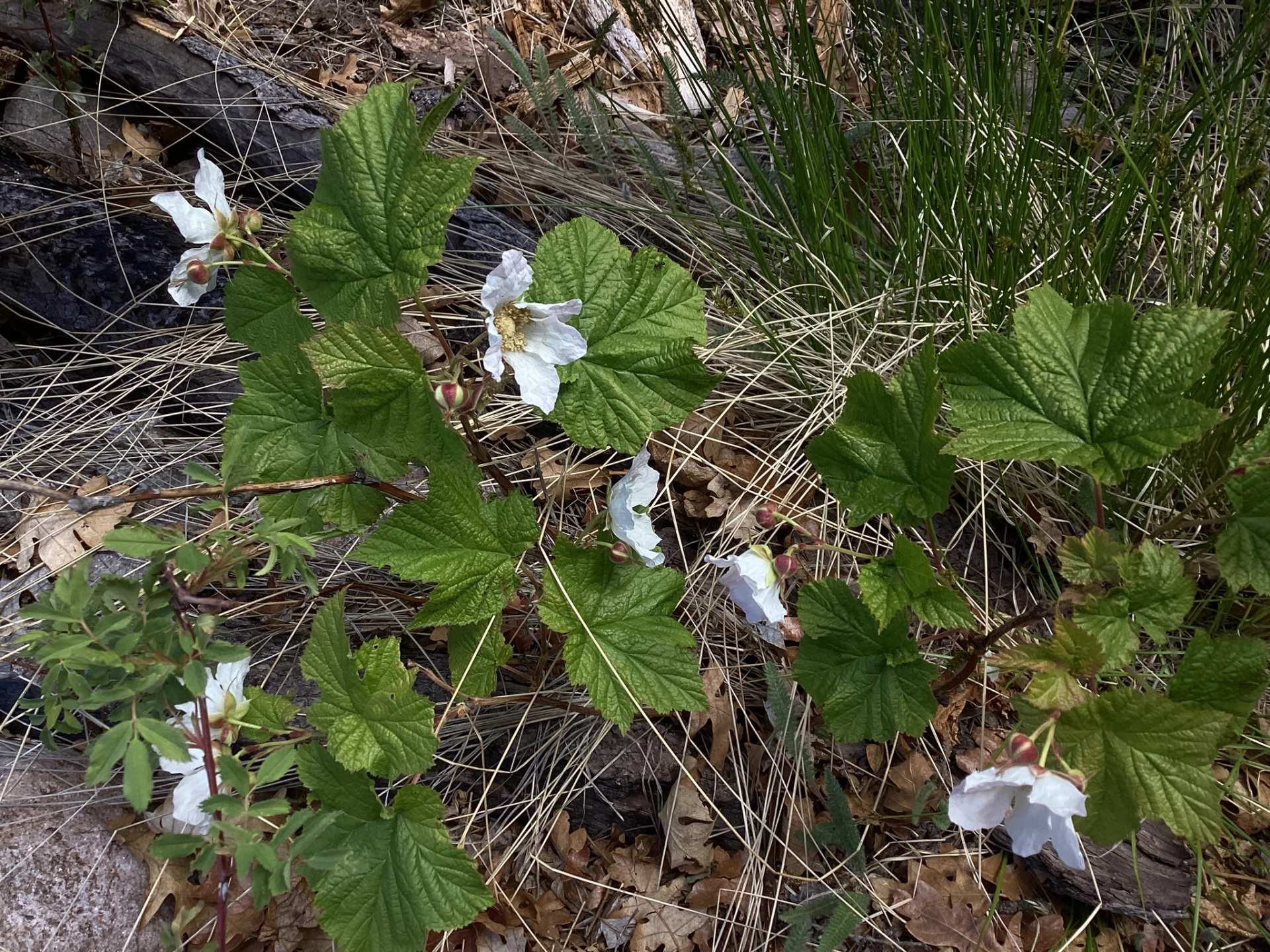
A few of the flowers taking root in the burn scar. I believe this is a New Mexico raspberry.
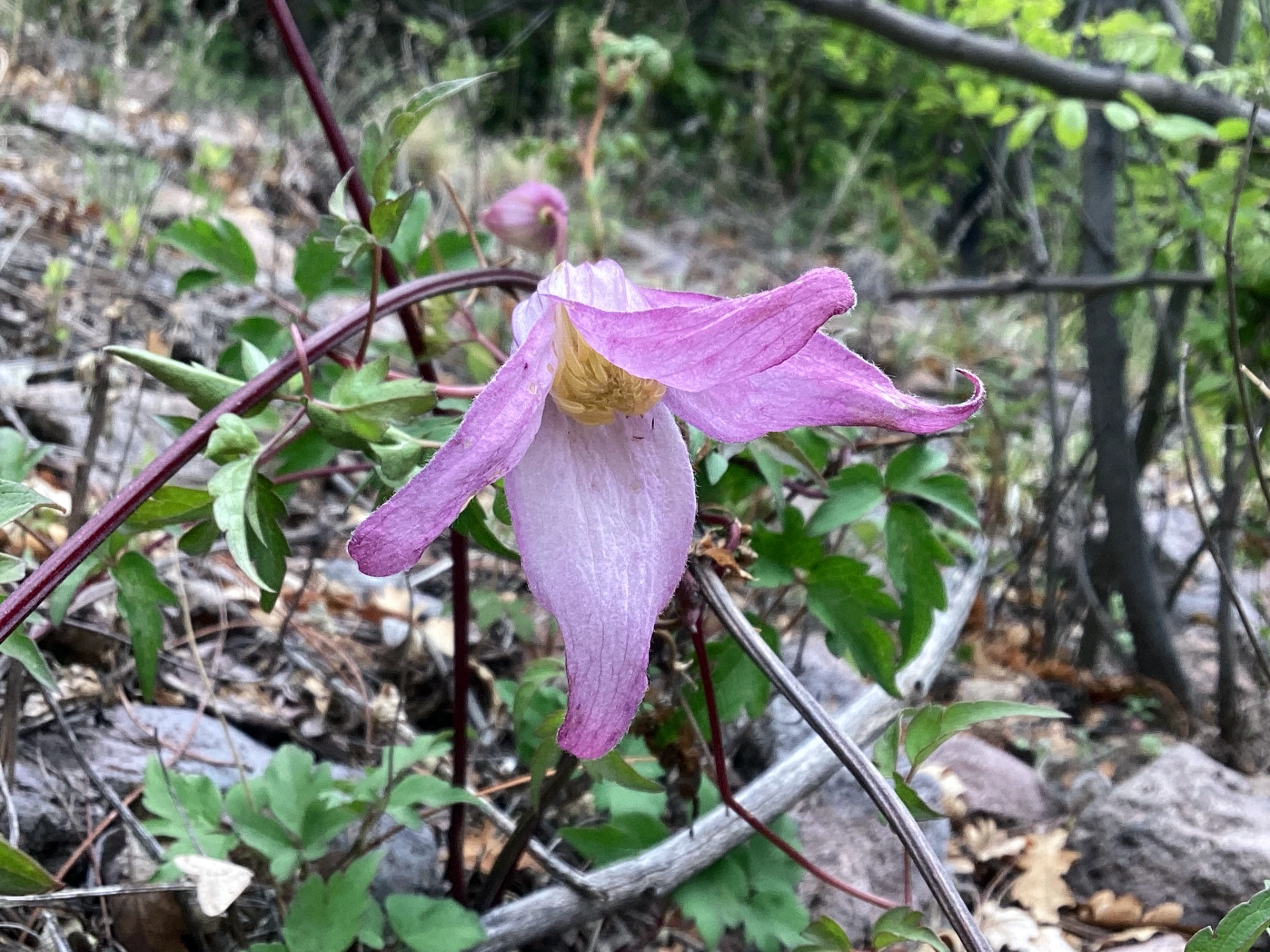
Columbia rock clematis.
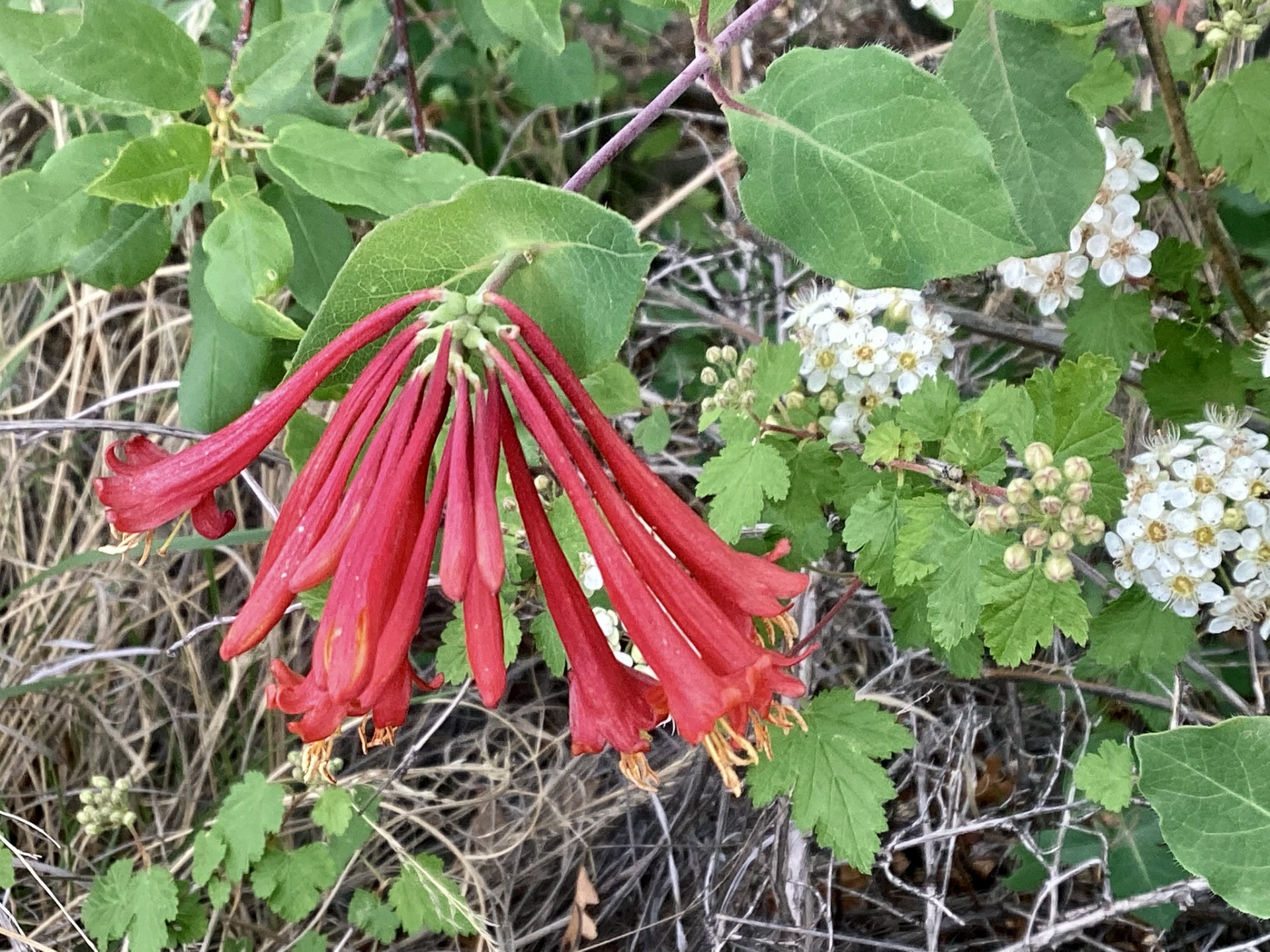
Arizona honeysuckle.
